Blog
How to Choose a Wooden Sofa for Small Living Rooms
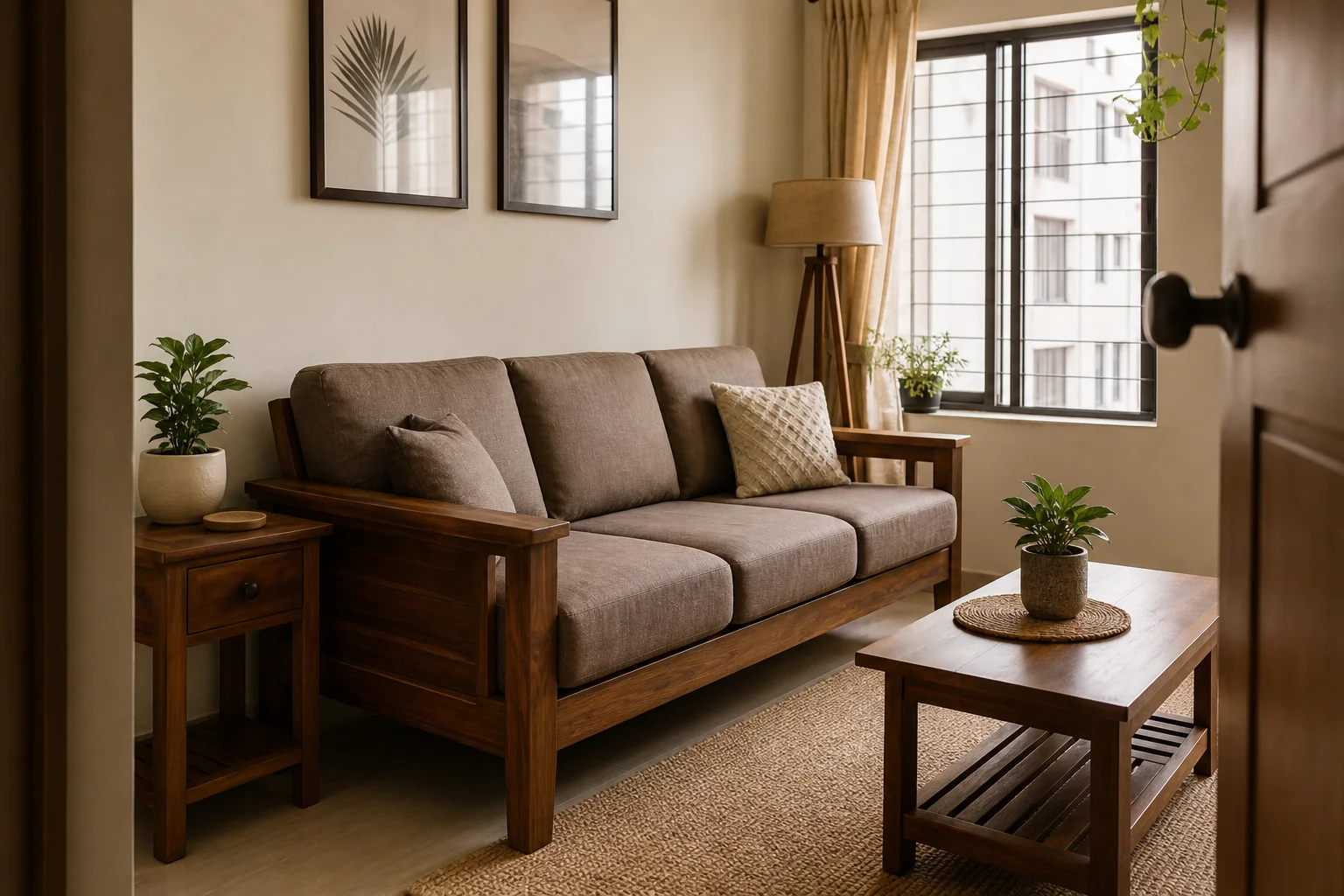
A sofa that looks perfect in a showroom can swallow a small living room whole once it’s home. The fix is simpler than most buyers expect: measure first, then choose seating style and frame material to match, and know exactly which red flags to walk away from. This guide covers how to choose a wooden sofa for small living room spaces in Bhopal, Indore, and other compact Indian homes, from sizing rules to teak wood quality checks.
Key Takeaways
- Measure clearance first: A 2.5 to 3-seater teak sofa under 165cm in width fits most 10×12 ft living rooms common in Bhopal apartments without blocking walking paths.
- Match upholstery to lifestyle: Removable, washable cushion covers save effort in homes with kids, pets, or Bhopal’s dusty pre-monsoon months.
- Solid teak beats engineered wood for longevity: A solid teak frame handles humidity swings and daily use far longer than plywood or MDF-based sofa frames.
- Sofa cum beds need scrutiny: Check hinge quality, mattress thickness, and frame material before buying one for a guest room or studio-style flat.
- Walk away from vague sellers: If a seller can’t name the teak grade, joinery method, or wood moisture content, treat that listing as a red flag, not a bargain.
At a Glance: Choosing a Wooden Sofa for Compact Spaces
| Sofa Type | Typical Width | Seating Capacity | Best For | Common Frame Material |
|---|---|---|---|---|
| Loveseat / 2-seater | 120-140 cm | 2 people | Singles, couples, studio apartments | Solid teak or engineered wood |
| Compact 3-seater | 150-170 cm | 3 people | Small families, 1-2 BHK homes | Solid teak wood |
| Sofa cum bed | 140-180 cm (sofa mode) | 2-3 people / 1-2 sleepers | Guest rooms, studio-style living | Solid wood frame with metal hinges |
| Compact L-shaped corner sofa | 180-210 cm (both arms) | 4-5 people | Rooms with an unused corner nook | Teak frame, cushioned back |
| Armless bench-style sofa | 130-160 cm | 2-3 people | Narrow rooms, hallway-facing seating | Solid teak with cane or fabric seat |
1. Measure Your Room Before You Even Start Browsing
Most sofa regrets start the same way: someone falls for a design online, orders it, and then discovers it blocks the balcony door or leaves no room to walk past the coffee table. Before you look at a single product photo, grab a tape measure and note three numbers: the length of the wall you plan to place the sofa against, the width of your main doorway (for delivery), and how much open floor space remains once you subtract space for a TV unit, dining corner, or walkway.
Living rooms in societies around Kolar Road, Arera Colony, and Shahpura in Bhopal typically run around 10×12 feet or smaller in newer apartment layouts. That leaves limited room for anything bulkier than a compact 3-seater once you account for a center table and walking clearance. As a general rule, leave at least 75 to 90 cm of walking space in front of the sofa, and keep the sofa’s depth under 90 cm if the room is on the tighter side.
Don’t forget the doorway and staircase width, especially in older buildings without a lift. A solid wood sofa frame doesn’t fold or flex like an upholstered one, so a piece that measures fine on paper can still get stuck at a tight stairwell turn. Ask the seller for exact carton dimensions, not just assembled dimensions, before you place an order.
2. Pick the Right Seating Style for How You Actually Live
Once you know your space, match the seating style to your household, not just the room size. A 2-seater loveseat works well for singles or couples who mostly use the living room for reading, working, or watching something together. It also leaves the most floor area free, which matters if the room doubles as a workspace or play area.
A compact 3-seater is the more practical middle ground for small families. It seats three comfortably without needing a full-depth frame, and it’s usually the sweet spot between space efficiency and everyday usability.
If your living room also functions as a guest room, especially common in 1BHK flats and studio-style homes, a sofa cum bed solves two problems at once. During the day it’s seating; at night it unfolds into a sleeping surface for visiting family or friends. This is one of the most requested styles among urban buyers looking for multifunctional furniture, but it needs closer inspection than a standard sofa, which we’ll cover shortly.
For rooms with an awkward unused corner, a compact L-shaped sofa can actually save space rather than eat into it, since it uses a corner that would otherwise sit empty. Just be sure the shorter arm doesn’t extend into your main walking path.
3. Solid Teak Wood vs Upholstered Frames: What Fits Compact Homes Better
Frame material decides how long your sofa lasts, and in smaller rooms, where furniture gets touched, sat on, and moved more often, that decision matters even more. Solid teak wood frames handle daily stress well because the wood’s natural oils resist warping from humidity swings, which is useful in central India’s mix of dry summers and humid monsoon months. A well-built teak sofa frame can genuinely last decades with basic care.
Engineered wood or plywood frames, often finished to look like solid wood, are lighter and usually cheaper upfront. The trade-off is durability. Over a few years of regular use, joints in engineered wood frames tend to loosen, and moisture exposure can cause swelling at the edges, particularly in ground-floor flats or homes near green belts with higher ambient humidity. If you’re weighing this decision more broadly, our detailed comparison on teak wood vs engineered wood furniture breaks down the cost and lifespan differences in more depth.

Upholstery choice matters just as much in compact homes. Leatherette wipes clean quickly and suits households with young kids or pets, though it can feel warmer in peak summer months. Fabric cushion covers breathe better and offer more design flexibility, but they show stains faster and need more frequent cleaning. If you’re unsure, look for sofas with removable, zippered cushion covers. That single feature saves significant maintenance effort over the life of the sofa, especially in smaller rooms where the same seating gets used constantly through the day.
For households in Bengaluru weighing similar frame and upholstery trade-offs, our solid teak wood furniture buyer’s guide for Bengaluru covers regional humidity considerations that apply just as well to other Indian cities.
4. Design Tricks That Make a Wooden Sofa Look Bigger in a Small Room
Choosing the right size is only half the job. The way a sofa is designed and placed can make a small room feel noticeably more open or more cramped, regardless of actual square footage. Here are a few practical design habits that help:
- Choose exposed wooden legs over boxy skirted bases. A sofa with visible teak legs lets light and floor show through underneath, which visually opens up the room compared to a solid base that touches the floor entirely.
- Contrast the frame and upholstery tones. A warm teak frame paired with a lighter cushion shade keeps the piece from feeling heavy or dominating the room visually.
- Go for low-back designs. Lower backrests keep sightlines open across the room, which matters in spaces with low ceilings or limited natural light.
- Look for built-in storage. Some compact sofas and sofa cum beds include a storage compartment under the seat, useful for stowing extra bedding or cushions without adding another piece of furniture to the room.
- Place it against a single wall rather than floating it. Floating furniture works in larger rooms, but in a small space, anchoring the sofa to one wall frees up the center of the room for movement.
If your living room also needs multifunctional storage beyond the sofa itself, our guide on choosing a storage bed that fits your room covers similar space-saving logic that applies to other furniture pieces in a compact home.
5. Red Flags to Avoid When Buying a Wooden Sofa Online
Buying furniture without touching it first means you’re relying entirely on product descriptions, photos, and the seller’s honesty. A few warning signs consistently separate reliable listings from disappointing ones.
- Vague wood claims. If a listing says “teak finish” or “teak wood look” instead of clearly stating “solid teak wood,” that’s often engineered wood or plywood with a teak-colored laminate, not the real material.
- Missing or approximate dimensions. A trustworthy seller lists exact width, depth, height, and seat height. “Approximate” measurements on a piece you can’t inspect in person is a gamble you shouldn’t take in a small room where every centimeter counts.
- Prices that seem too low for “solid teak.” Genuine solid teak wood furniture involves a raw material and craftsmanship cost that keeps prices within a realistic range. A steep discount on a claimed solid teak sofa usually means compromised wood grade or a different material altogether.
- No visible joinery detail in photos. Zoom into leg attachments and armrest joints if photos allow. Staples, visible nails, or plastic brackets holding major joints together suggest lower-grade construction.
- No return or inspection window. Reliable furniture sellers offer a clear return or replacement policy for damage or mismatched description. Absence of this policy is a sign to shop elsewhere.
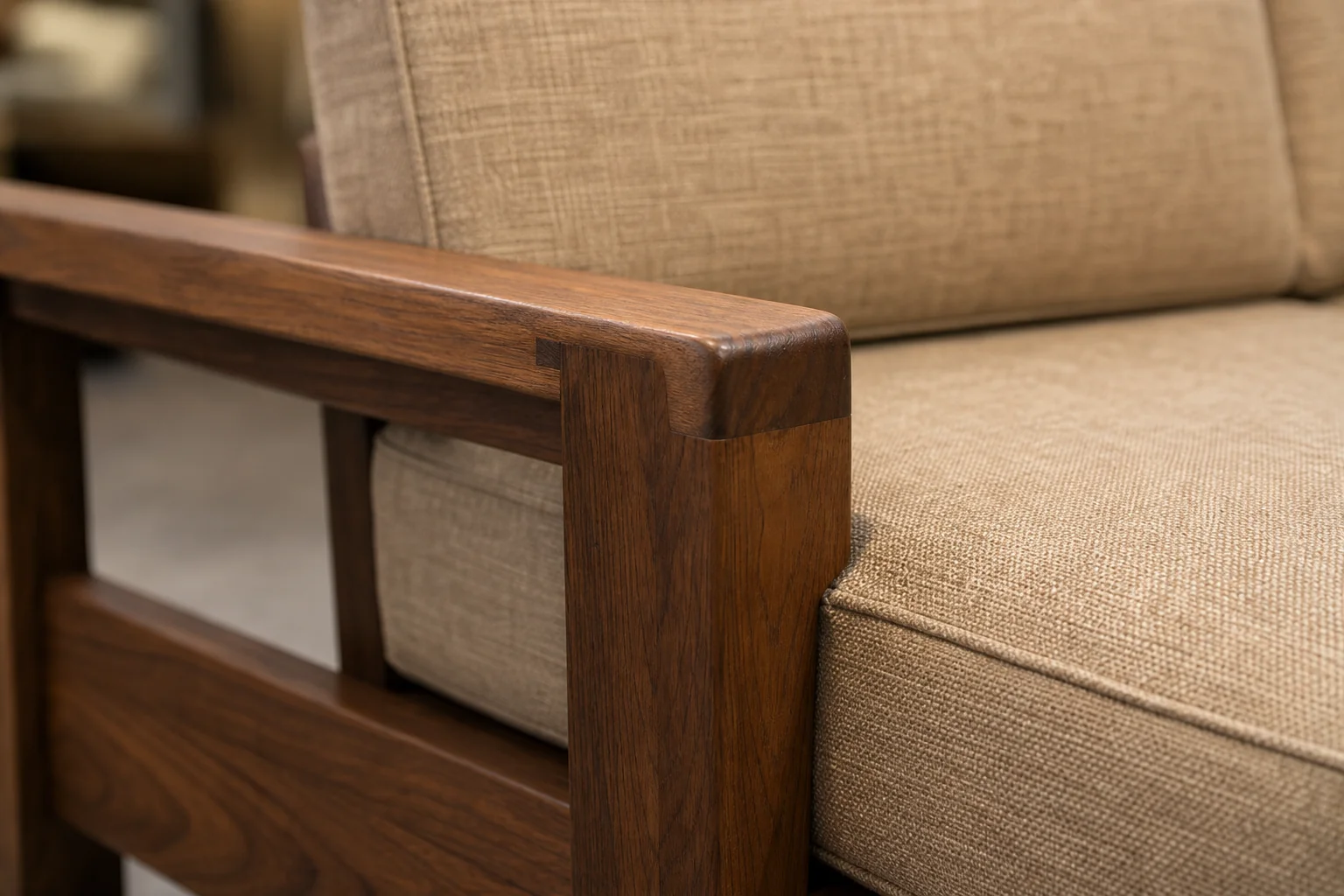
If you want a deeper walkthrough of how to visually and physically verify real teak before you buy, our guide on how to check real teak wood before buying furniture covers grain patterns, weight tests, and the questions worth asking any seller directly.
6. Matching Sofa Style to Your Room Layout
Layout constraints differ a lot between a studio apartment, a 1BHK, and a 2BHK, even within the same city. In a studio or 1BHK, where the living room often sits right next to the kitchen or entry door, a loveseat or armless bench-style sofa usually works better than a 3-seater, since it keeps the entry path clear. In a 2BHK with a slightly larger living area, a compact 3-seater or L-shaped corner sofa can anchor the room without overwhelming it, especially if there’s a TV unit or console table on the opposite wall.
Think about sightlines too. Position the sofa so it faces the TV unit directly rather than at an angle, and keep at least 2 to 2.5 meters of distance between the sofa and a mid-sized television for comfortable viewing without over-cramming the room. If you already own teak furniture elsewhere in the home, matching the sofa’s wood tone to your existing dining set or TV console creates visual consistency, something worth checking against our guide on teak wood dining table pricing and finishes if you’re planning to buy multiple pieces together.
Buyers comparing options across brands often find it useful to see how different retailers approach compact furniture sizing. Our comparison piece, TeakLab vs Urban Ladder: Chennai Buyer’s Comparison, walks through how sizing, pricing, and material transparency differ between a specialist teak retailer and a broader multi-brand marketplace.
7. Caring for Your Wooden Sofa in Small, High-Traffic Spaces
Small living rooms tend to see more foot traffic per square foot than larger ones, simply because there’s less room to spread activity out. That means your sofa’s arms, legs, and cushion edges take more contact over time. Wipe down the wooden frame with a slightly damp cloth weekly to clear dust, and avoid placing the sofa directly under a window that gets strong afternoon sun, since prolonged UV exposure can fade both wood finish and fabric upholstery.
Rotate and flip cushions every few weeks if they’re not attached, so wear spreads evenly instead of concentrating on one seat. For solid teak frames specifically, an occasional application of teak oil keeps the wood’s natural sheen intact and prevents it from drying out, particularly during Bhopal’s hot, dry summer months. Our detailed guide on how to maintain teak wood furniture at home covers the full seasonal care routine, including what to do before and after monsoon.
Frequently Asked Questions
What size sofa is ideal for a 10×10 ft living room?
For a 10×10 ft living room, a loveseat or compact 3-seater under 160cm in width usually works best. This leaves enough floor space for a center table and a comfortable walking path, which matters more in a square room than a rectangular one.
Is a sofa cum bed a good idea for small homes?
Yes, for homes that double as guest space or lack a separate bedroom, a sofa cum bed is a practical choice. Just check the hinge mechanism, mattress thickness, and whether the frame is solid wood before buying, since lower-quality versions tend to sag or squeak within a year or two of regular use.
Does a solid teak wood sofa need more maintenance than a fabric sofa?
Not significantly more, just different care. A teak frame benefits from occasional oiling and dusting, while fabric upholstery needs more frequent cleaning to manage stains. Sofas with removable cushion covers reduce this effort considerably.
How much space should I leave between the sofa and TV unit?
Aim for roughly 2 to 2.5 meters between the sofa and a mid-sized television for comfortable, strain-free viewing. In very compact rooms, this distance often dictates the maximum sofa depth you can realistically fit.
Can I mix a wooden sofa with rattan or cane accent chairs in a small living room?
Yes, pairing a solid teak sofa with a lighter rattan accent chair is a common way to add visual variety without adding bulk, since cane pieces tend to look airier than fully upholstered furniture. If you’re weighing this combination for your home, our guide on teak wood vs rattan furniture for Indian homes explains where each material fits best.
A wooden sofa chosen with the room’s actual dimensions in mind, not just its style, is the single biggest factor in whether your small living room feels comfortable or cramped a year from now.
Choosing the right wooden sofa for a small living room comes down to getting the fundamentals right: measure before you shop, pick a seating style that matches how your household actually uses the space, and insist on solid teak construction with clear, honest sourcing details. Skip listings that dodge questions about wood grade or joinery, and you’ll avoid the most common regrets buyers face with online furniture purchases. If you’re ready to see how these principles look in real designs, you can shop the collection of compact sofas, loveseats, and sofa cum beds built on solid teak frames, or use quick view on individual listings to check exact dimensions before you decide. Once you’ve found the right fit for your room, you can add it to your basket and move one step closer to a living room that finally feels right-sized.