Blog
How to Check Real Teak Wood Before Buying Furniture
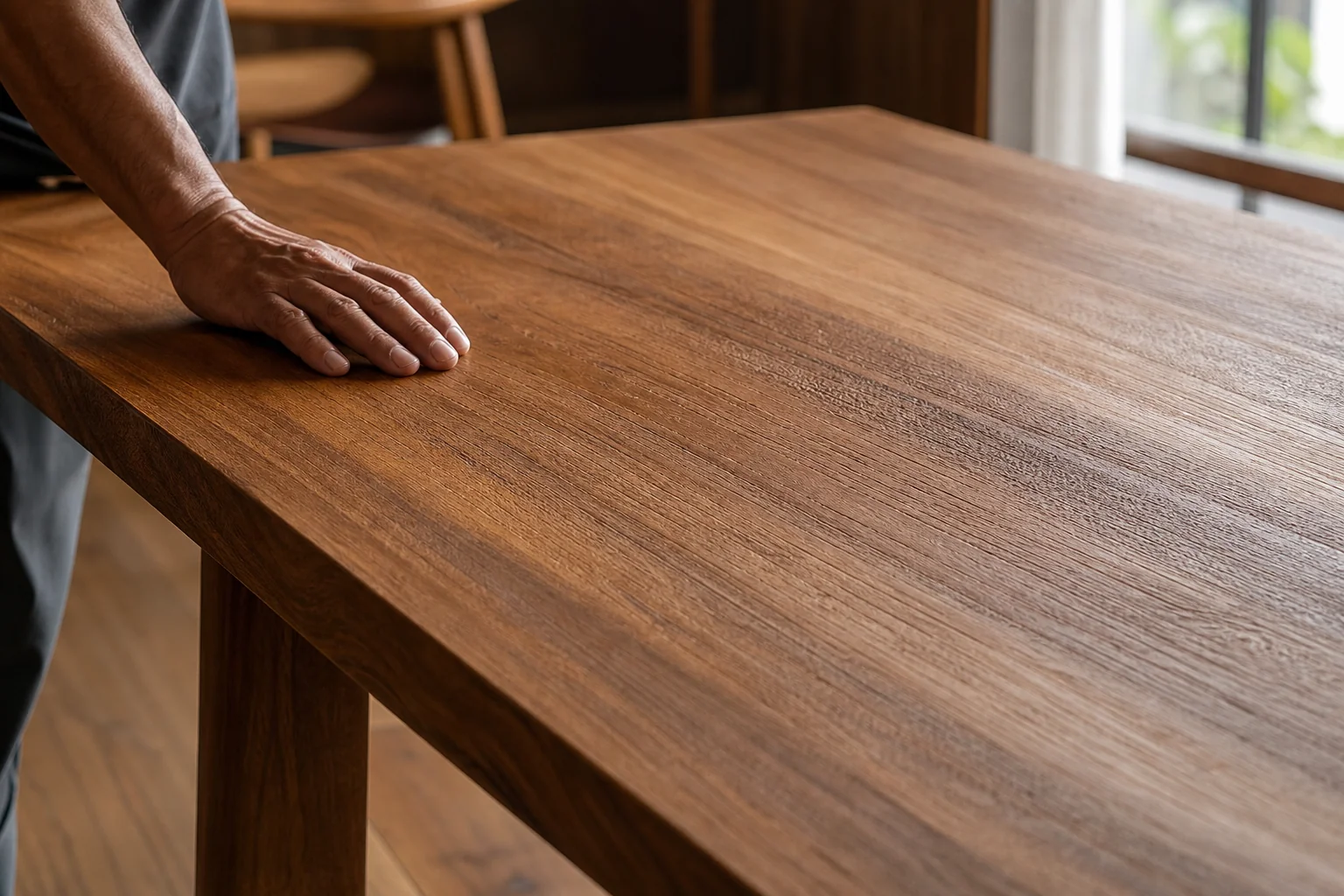
A furniture shopper in Bhopal once zoomed into a product photo on her phone for nearly ten minutes, trying to decide if the “teak” console table she was about to order was actually teak. She had no showroom nearby to walk into and touch the wood, so she was left guessing from pixels alone. That single moment of doubt is exactly what stops thousands of online furniture buyers from clicking “buy” with confidence.
If you’re wondering how to check real teak wood before buying furniture online, you’re not overthinking it. Teak is one of the most imitated woods in the Indian furniture market. Sellers stain rubber wood, wrap MDF in teak-look veneer, or quietly swap in mango wood, all while using the word “teak” loosely in listings. The good news: you don’t need a lab or a moisture meter to spot most fakes. You just need to know what to look for, and how to ask the right questions before you buy, whether you’re shopping from Bhopal, Indore, or anywhere else in India.
This guide walks through six practical checks, real photos versus what to watch out for, a quick comparison table of teak against common substitutes, and answers to the questions buyers ask most often.
1. Study the Grain Pattern Closely
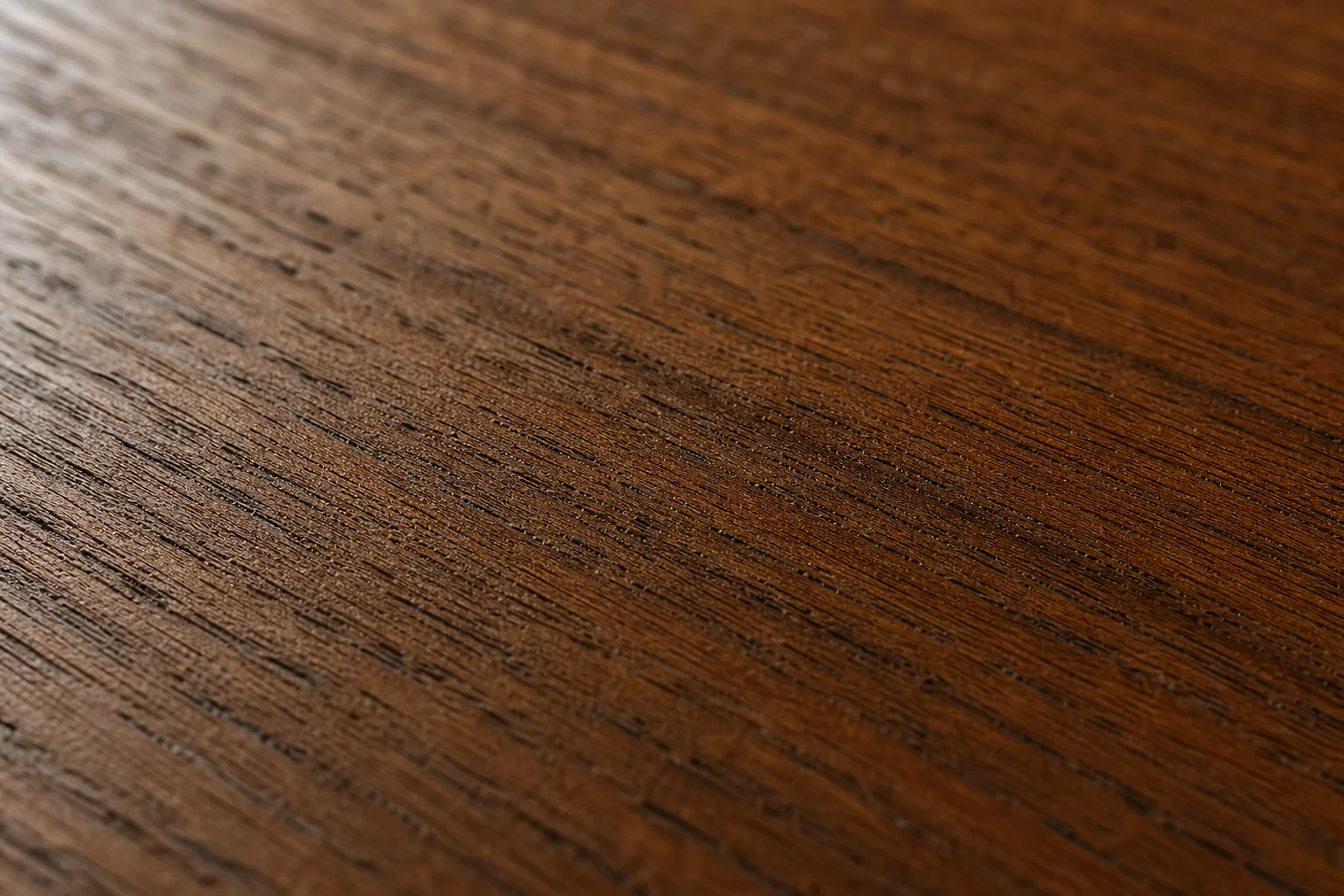
Grain is the first and most reliable clue. Genuine teak has a mostly straight grain with a gentle wave running through it, and you’ll usually spot small, visible pores scattered across the surface. It looks organic, not printed. No two planks are identical, even on the same table.
Fakes tend to give themselves away here. Teak veneer glued over plywood or MDF often shows a grain that repeats every few inches, almost like wallpaper, because the same thin sheet of real or printed veneer is wrapped around a flat core. If you zoom into a product photo and the grain pattern looks suspiciously uniform from one leg to another, that’s worth questioning.
When you’re shopping online, don’t settle for one hero shot. Ask the seller for close-up images from different angles and under natural light. This is exactly why detailed macro photography matters so much for teak wood furniture listings. It replaces the “touch test” you’d normally do in a showroom.
2. Check the Color and How It Ages
Freshly cut and finished teak carries a warm golden-brown tone with subtle variation, sometimes leaning honey, sometimes deeper brown, depending on the plantation and cut. Left outdoors and unsealed, it slowly weathers to a soft silvery grey over a year or two. Indoors with regular oiling, it deepens into a rich amber-brown over time. This natural aging is a hallmark of real teak.
Compare that to common substitutes. Rubber wood is naturally pale and slightly pinkish, so sellers stain it darker to mimic teak, and the color often looks flat and uniform, almost too even. Mango wood has lighter, more inconsistent tones with less of that natural oily sheen teak is known for. If every single plank in a listing photo looks like it was colored from the same paint can, that uniformity is a signal, not a compliment.
A simple ask that helps: request a photo taken in daylight, not just under studio lighting. Studio lights can flatten color differences and make a stained substitute look convincingly like teak.
3. Do the Weight and Density Test
Teak is a moderately dense hardwood. Pick up a solid teak side table or a drawer front and it should feel substantial for its size, not hollow or papery. That density is part of why teak furniture survives decades of daily use, from dining chairs to bed frames.
Engineered wood, like MDF or particle board dressed up with a teak-look laminate, is noticeably lighter for the same dimensions. It also chips at the corners and edges more easily, revealing a compressed, sawdust-like core rather than continuous wood fiber. If you’re buying online and can’t lift the piece yourself, ask the seller two things: the actual weight specification (genuine teak furniture listings usually state this), and whether they can tap the surface on a video call so you can hear the dense, solid sound real wood makes versus the hollow knock of a hollow-core panel.
This matters most for pieces under daily stress, like a dining table sold for a family of six or a solid teak wood furniture wardrobe that will carry years of folded clothes. Weight isn’t just trivia, it’s a working indicator of how the piece will hold up.
4. Do the Smell and Oil Feel Test
This is the test showroom shoppers rely on most, and it’s easy to replicate even if you’re buying remotely. Genuine teak has a distinct natural smell, often described as leathery, slightly sweet, almost like fresh hay mixed with oil. It’s strongest when the wood is freshly sanded or cut, but a faint version lingers even on finished furniture.
Run your fingers over an unfinished or lightly sanded part of real teak, like the underside of a table or the back of a drawer, and you’ll often feel a faint natural oiliness. That’s teak’s own natural oils, the same ones that make it naturally resistant to water and pests without heavy chemical treatment. Stained substitutes and heavily varnished lookalikes usually smell like chemical polish or nothing distinctive at all.
Since you can’t smell a photo, the workaround for online buyers is simple: ask the seller for a short video call where they show and describe an unfinished section, or request a small sample swatch before committing to a large order like a dining set or wardrobe. A seller confident in their material won’t hesitate to do this.
5. Inspect Joinery, Finish, and Hardware
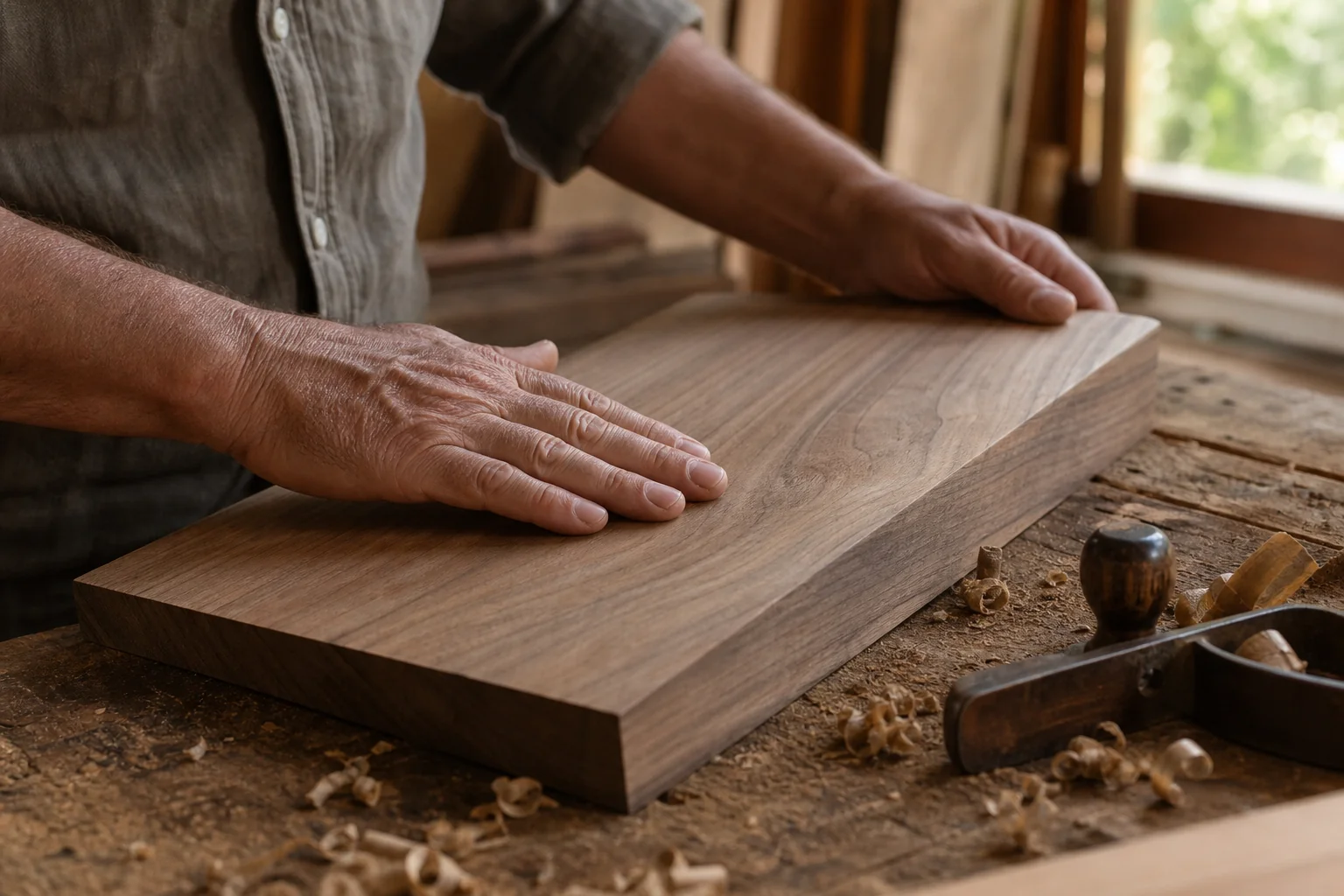
Flip your attention from the wood itself to how the piece is built. Genuine solid teak furniture is typically joined using mortise-and-tenon or dovetail joints, techniques that lock wood pieces together mechanically, not just with glue and a few staples. These joints are visible if you look at drawer corners, chair legs, or where a tabletop meets its frame.
Check the finish consistency too. Reputable makers finish the inside of drawers, the underside of tabletops, and the back panels of wardrobes with the same care as the visible front. Cheaper substitutes often skip this, leaving raw or unfinished panels where buyers are less likely to look. Hardware quality tells its own story: smooth-running drawer channels and solid hinges usually mean the maker invested in the whole piece, not just the parts that photograph well.
When shopping online, don’t be shy about asking for photos of the underside, the back panel, or an open drawer. A seller who readily shares these angles is signaling they have nothing to hide.
6. Ask the Seller the Right Questions
Sometimes the fastest way to verify real teak wood is simply to ask better questions before you buy. Here’s a short list worth sending in a chat or email:
- What wood species is this, exactly? “Teak” should be a specific answer, not “teak finish” or “teak style.”
- What grade of teak is used? Teak is graded (commonly A, B, or C) based on oil content, grain quality, and knots. A reputable seller should know and share this.
- How was the wood seasoned? Properly kiln-dried or air-seasoned teak resists warping and cracking. Vague or evasive answers here are a red flag.
- Where is the wood sourced from? Plantation-grown teak from managed forests is both more sustainable and easier to trace than unspecified sourcing.
- Is this solid wood or veneer over a core material? This should be stated plainly, not buried in fine print.
Vague, marketing-heavy answers like “premium teak finish for a luxurious look” without specifics are worth treating with caution. A seller who genuinely uses solid teak wood typically has no reason to dodge these questions, and will usually offer the details upfront in the product description itself.
Teak vs Common Substitutes: A Quick Comparison
Here’s a side-by-side look at solid teak against the materials most often used as substitutes or sold under confusingly similar names.
| Material | Grain Appearance | Weight/Density | Natural Water Resistance | Typical Lifespan | Best Suited For |
|---|---|---|---|---|---|
| Solid Teak Wood | Straight, slightly wavy, visible natural pores | Moderately heavy, dense, solid feel | High (natural oils resist moisture and pests) | 25+ years with basic care | Dining sets, outdoor furniture, beds, wardrobes |
| Teak Veneer over MDF/Plywood | Often repetitive or overly uniform | Lighter, edges chip easily | Low to moderate, depends on sealing | 5-10 years | Budget indoor decor pieces |
| Rubber Wood (stained) | Fine, pale grain, evenly stained | Lighter than teak | Low, prone to moisture damage | 8-12 years | Entry-level indoor furniture |
| Mango Wood | Lighter tone, less oily sheen, visible knots | Lighter to medium | Moderate with sealing, needs upkeep | 10-15 years | Rustic-style accent furniture |
| Rattan/Cane | Woven texture, not a wood grain at all | Very light | Moderate, needs indoor placement mostly | 10-15 years with care | Lounge chairs, balconies, casual seating |
This table is a quick-glance reference, but the tests above (grain, color, weight, smell, joinery, and direct questions) are what actually confirm which category a piece falls into. If you’re weighing teak wood vs rattan furniture for a Mumbai balcony or comparing solid teak against engineered wood for a Hyderabad bedroom, the same verification logic applies across every room in the house.
How TeakLab Closes the Online Trust Gap
The core problem with buying furniture online isn’t the internet, it’s the missing sensory information: the grain you’d normally run your fingers over, the weight you’d normally lift, the smell you’d normally notice standing next to a showroom piece. TeakLab was built around closing that exact gap for buyers across Bhopal, Indore, Mumbai, Pune, Bengaluru, and other major Indian cities where a physical visit to a workshop isn’t always practical.
Every product listing is photographed to show the grain up close, not just a polished hero shot from three feet away. Descriptions state the wood grade, the joinery method, and sourcing details plainly, instead of hiding behind terms like “teak finish.” This is the same transparency this guide has walked you through, just built into the shopping experience itself so you don’t have to chase down answers over email.
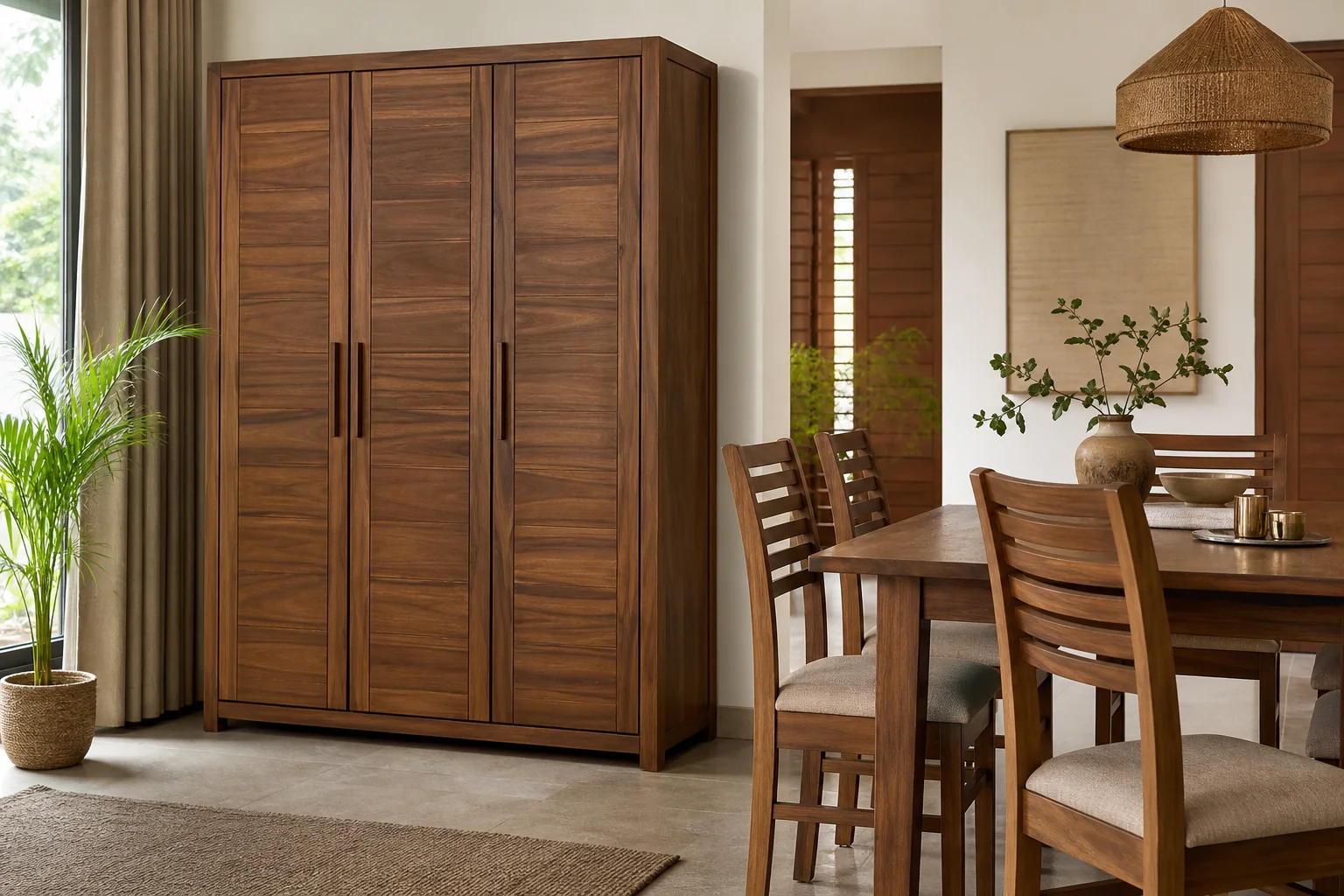
Before you commit to a large purchase like a dining set or a solid wood wardrobe, use the Quick view tool on any listing to check dimensions, wood grade, and finish details without leaving the page. If a design catches your eye, Select options to compare size and finish variants side by side. And if you’ve already done your homework using the checks in this guide and you’re confident in what you’re looking at, you can go ahead and add it to your basket with far less guesswork than a typical online furniture purchase involves.
For readers specifically comparing options city by city, our Bengaluru buyer’s guide to solid teak wood furniture goes deeper into local delivery timelines and showroom-style verification for that region, and much of the same logic applies whether you’re ordering to Bhopal or any other city on our delivery map.
Frequently Asked Questions
Can I check real teak wood just from photos?
You can get most of the way there. Close-up, natural-light photos reveal grain pattern and color variation clearly, which covers two of the biggest fake indicators. What photos can’t tell you is weight and smell, so for a big purchase, it’s worth asking the seller for a short video call or a sample swatch to confirm those final details before you buy.
Is teak veneer furniture bad, or just cheaper?
Teak veneer isn’t automatically bad, it’s simply a different product with a shorter lifespan and lower durability than solid teak. The real issue is when it’s sold without disclosure, as if it were solid wood. If a listing is upfront that a piece uses veneer over a core material, you can make an informed decision based on your budget and how long you expect to keep the furniture.
How do I know if teak furniture is well-seasoned?
Well-seasoned teak has a stable moisture content, usually brought down through kiln drying or controlled air drying before the wood is cut and assembled. Ask the seller directly about their seasoning process. Furniture made from poorly seasoned wood tends to warp, crack, or develop gaps at joints within the first year or two, especially in humid climates.
Does real teak furniture always feel oily?
Not always to the same degree. Higher-grade teak with more natural oil content feels noticeably oilier, especially on unfinished or lightly sanded surfaces. Lower-grade teak from younger trees has less natural oil and can feel drier to the touch, though it’s still genuine teak. This is one reason asking about the grade of teak used matters as much as confirming the species itself.
What is the safest way to buy teak furniture online without inspecting it in person?
Combine the checks in this guide: study close-up grain photos, ask for daylight color shots, confirm weight specifications, request a short video call to check smell and joinery, and ask direct questions about wood grade and sourcing. Buying from a retailer that already provides this information upfront, rather than making you chase it down, is the most reliable shortcut to a confident purchase.
Verifying real teak wood before buying doesn’t require a workshop visit or special tools, just a sharper eye and a willingness to ask direct questions. Use the checks in this guide the next time you’re comparing listings, and lean on sellers who photograph their grain honestly and describe their wood in plain terms. When you’re ready to see what genuine, transparently sourced teak furniture looks like up close, shop the collection and use the Quick view details on each piece to confirm exactly what you’re bringing home.