Blog
How to Maintain Teak Wood Furniture at Home?
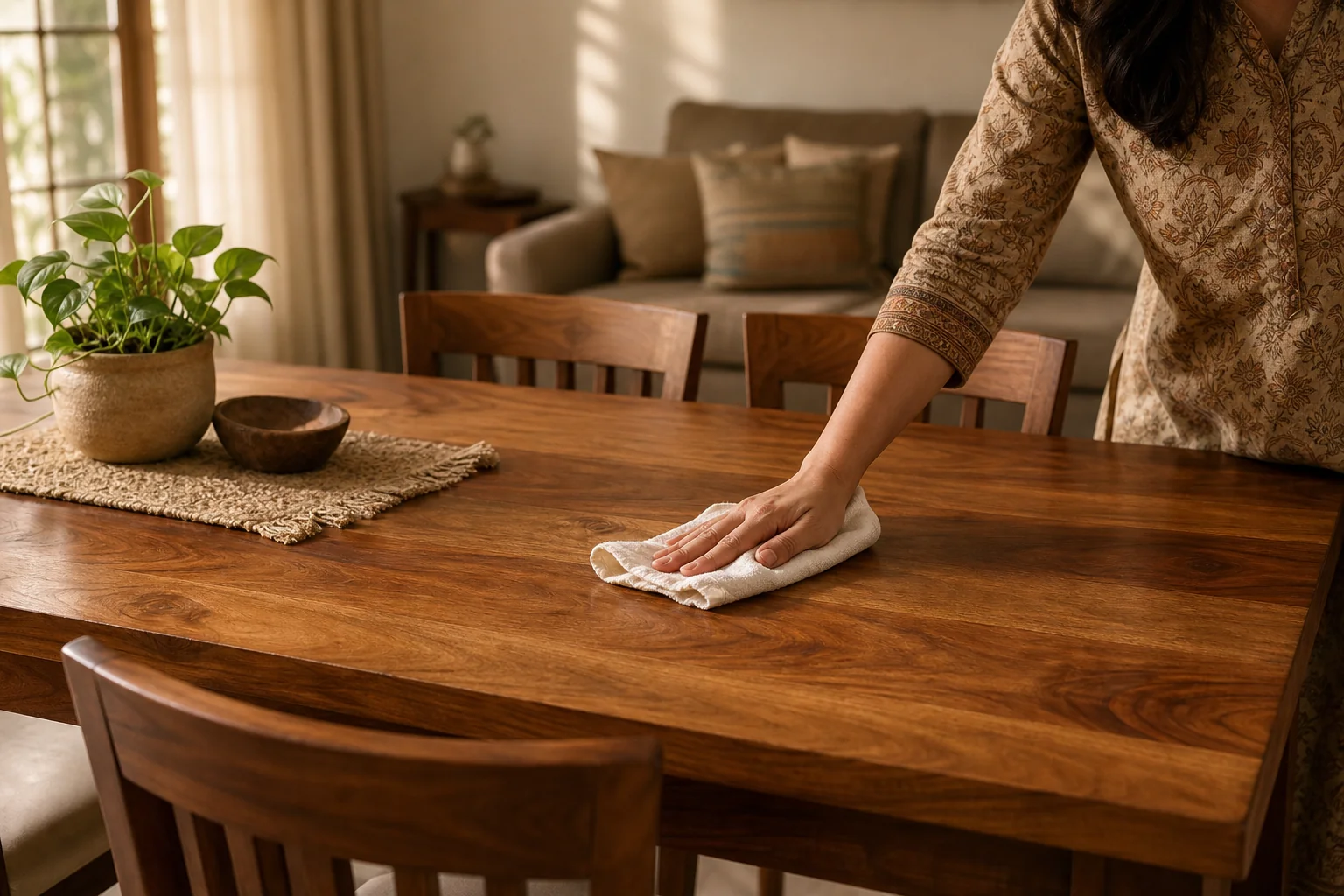
A reader in Bhopal recently wrote in with a simple worry: she had just paid a good sum for a solid teak dining set and wanted to know if it would still look this good when her kids inherited it one day. That question sits at the heart of every teak purchase. Buying the furniture is the easy part. Knowing how to maintain teak wood furniture at home is what decides whether it becomes a family heirloom or just another piece you replace in five years.
The good news is that teak is one of the most forgiving woods you can own. Its natural oils resist rot, pests, and moisture far better than most timbers sold in Indian showrooms today. But “low maintenance” doesn’t mean “no maintenance.” A little routine care, especially in a city like Bhopal where summers run bone-dry and monsoons swing humidity levels the other way, keeps the wood’s color, strength, and finish intact for decades. This guide answers the questions homeowners across Bhopal, Indore, Mumbai, Pune, and beyond ask most often about cleaning, polishing, humidity control, and preventing cracks or fading in solid teak furniture.
Why Teak Wood Furniture Needs Different Care Than Other Wood
Teak isn’t just another hardwood. It contains natural oils and silica that make it naturally water-resistant, insect-repellent, and slow to rot, which is exactly why it has been used in shipbuilding and outdoor furniture for centuries. Engineered wood or particle board furniture doesn’t have this built-in protection, so it swells, peels, or sags much faster when exposed to moisture. If you’ve compared teak wood vs engineered wood furniture options before buying, you already know this difference shows up within a couple of monsoons, not years.
That said, teak still needs a routine. Its oils fade on the surface over time from dusting, sunlight, and general wear, even though the wood underneath stays structurally sound. Reapplying oil or polish isn’t about “fixing” the wood; it’s about topping up the protective layer that keeps moisture out and the grain looking rich.
Bhopal’s climate makes this especially relevant. The city sees dry, dusty summers from March to June, followed by a humid monsoon from July to September, then a cooler, drier winter. That swing between dry and damp conditions is exactly the kind of stress that causes wood to expand and contract. Furniture owners across Madhya Pradesh, and in similarly variable climates like Indore, Bengaluru, Mumbai, and Pune, need to time their care routine around these seasonal shifts rather than treating maintenance as a once-a-year afterthought.
1. How Often Should You Clean Teak Wood Furniture?
Cleaning teak furniture is simpler than most people expect, and overcleaning is a more common mistake than undercleaning. Here’s a realistic routine:
- Daily: A quick pass with a dry, soft cotton cloth removes dust before it settles into the grain. This takes less than a minute per piece.
- Weekly: Wipe down surfaces with a slightly damp cloth to lift grime, fingerprints, or light stains. Dry immediately with a second cloth so moisture doesn’t sit on the wood.
- Monthly: Check joints, legs, and undersides for dust buildup or early signs of dryness, such as a chalky or dull surface.
Avoid ammonia-based glass cleaners, bleach, and abrasive scrub pads on any teak surface. These strip the wood’s natural oils and can leave the surface looking patchy. Steel wool in particular can scratch the grain permanently. Stick to a mild solution of water and a few drops of pH-neutral soap if a stain needs more than a damp cloth.
A soft cloth and five minutes a week will do more for your teak furniture’s lifespan than any expensive polish applied carelessly once a year.
2. What Is the Best Way to Polish Teak Furniture?
Polishing is where most of the confusion around teak upkeep comes from, largely because the market is flooded with products that aren’t meant for solid wood. Here’s how the main options compare.
| Product Type | Best For | How Often to Use | Watch Out For |
|---|---|---|---|
| Teak oil | Indoor and outdoor teak, restoring natural grain color | Every 6-12 months indoors; every 3-4 months outdoors | Apply thin coats; excess oil attracts dust |
| Furniture wax | Indoor furniture that needs a light protective sheen | Every 3-6 months | Don’t layer wax over old oil without cleaning first |
| Silicone spray polish | Not recommended for solid teak | Avoid | Builds up a sticky film and blocks the wood from breathing |
| Teak sealer | Outdoor furniture exposed to rain and sun | Once a year, before monsoon season | Needs full drying time between coats |
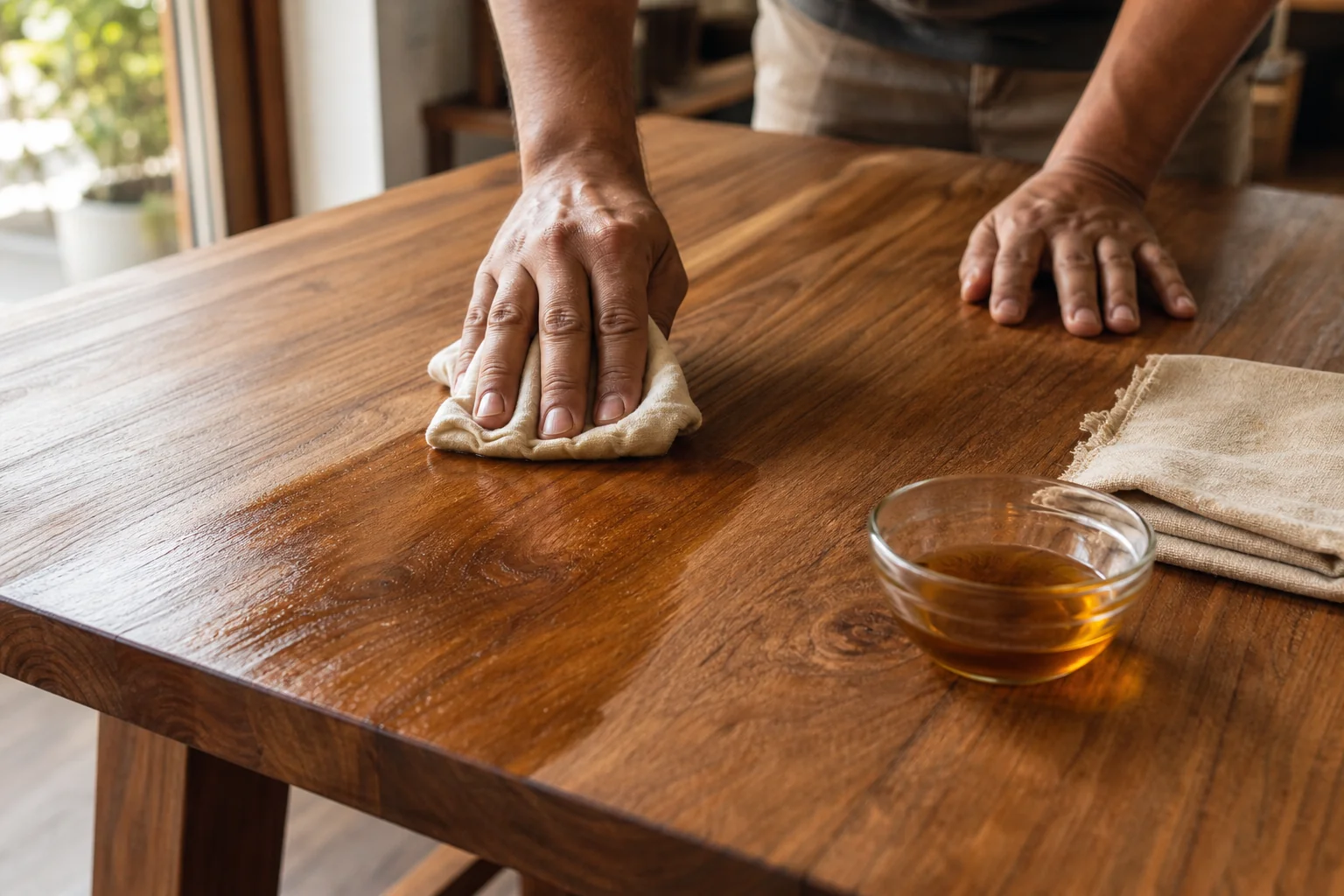
For most homeowners, teak oil is the simplest and safest choice. Here’s a step-by-step method that works well for dining tables, sofas, beds, and study desks alike:
- Clean the surface thoroughly and let it dry completely, ideally for a few hours.
- Apply a small amount of teak oil to a soft cloth, not directly onto the wood.
- Rub in the direction of the grain using long, even strokes.
- Let it sit for 10-15 minutes, then wipe off any excess with a clean, dry cloth.
- Allow the piece to cure for 24 hours before placing objects back on the surface.
If you’re unsure whether a piece is genuinely solid teak before you invest in a full polishing routine, it’s worth reading TeakLab’s guide on how to check real teak wood before buying furniture, since polish behaves differently on veneer or teak-finish laminates than it does on solid timber.
3. How Do You Control Humidity Around Teak Furniture?
Wood is hygroscopic, meaning it absorbs and releases moisture from the air around it. Teak resists this better than most species, but extreme swings still cause the wood to expand, contract, and eventually crack at joints or seams if ignored for years. Aim to keep indoor humidity between 40% and 60%. Here’s how to manage it practically:
- During monsoon months (roughly June to September across most of central and western India), run a dehumidifier or air conditioner in dry mode for a few hours daily in rooms with teak furniture.
- During peak summer, avoid placing furniture directly under ceiling fans or AC vents, since constant airflow dries out the wood unevenly and can cause surface cracking.
- Use coasters, mats, and trivets under glasses, hot dishes, and flower vases to stop water rings from forming on tabletops.
- Keep a small gap between furniture and exterior walls, since walls absorb more ambient moisture during monsoon and can transfer it to wood placed flush against them.
This matters more in some cities than others. Homeowners in Mumbai and coastal regions deal with far higher ambient humidity year-round than those in Bhopal or Indore, so the frequency of dehumidifying and oiling should be adjusted accordingly. If you’re furnishing a home in a high-humidity city, it’s worth reading TeakLab’s dedicated guide on solid teak wood furniture in Bengaluru, which covers similar climate considerations for buyers in the south.
4. How Do You Prevent Cracks, Fading, and Sun Damage?
Sunlight is one of the biggest reasons teak furniture loses its rich brown tone over time. UV rays gradually bleach the surface to a silvery-gray patina, which some homeowners actually like for outdoor pieces, but which most people want to avoid for indoor furniture like sofas, dining sets, and study desks.
- Rotate furniture placement every few months if a piece sits near a window that gets direct afternoon sun. Even sliding a sofa a foot to one side reduces uneven fading.
- Use sheer curtains or UV-blocking window film in west-facing rooms, which typically get the harshest late-afternoon light.
- Reapply oil more frequently on pieces that get regular sun exposure, since UV rays dry out the wood’s natural oils faster than shaded furniture.
- Avoid placing furniture directly against radiators, heaters, or kitchen exhaust vents, since concentrated heat causes localized drying and cracking.

Outdoor teak needs a slightly different approach, especially in monsoon-heavy cities. If you own or are considering teak dining sets for a Pune balcony or patio, plan on resealing outdoor pieces once a year before the rains start, and always store detachable cushions indoors when not in use. TeakLab’s outdoor collections use UV and moisture-protected finishes specifically to reduce this burden, but even protected outdoor furniture benefits from an annual check and reseal.
5. How Should You Handle Spills, Stains, and Scratches?
Accidents happen, especially with dining tables, kids’ study desks, and coffee tables in daily use. Here’s how to respond without making things worse:
- Liquid spills: Blot immediately with a dry cloth; never wipe in circles, which spreads the liquid further into the grain.
- Oil or grease stains: Dab with a cloth dampened in mild soap solution, then dry thoroughly. Avoid soaking the area.
- Watermarks or rings: Gently rub with a cloth dipped in a small amount of mayonnaise or non-gel toothpaste, both of which lift light watermarks without damaging the finish, then wipe clean and re-oil the spot.
- Minor scratches: Sand very lightly with fine-grit sandpaper (400 grit or higher) in the direction of the grain, then apply a small amount of teak oil to blend the area back in.
- Deep gouges or structural cracks: These need a professional furniture restorer rather than a DIY fix, especially on load-bearing pieces like bed frames or dining table legs.
For furniture in children’s rooms, always double-check that any cleaning product is non-toxic and fully dry before kids touch the surface again. If you’re furnishing a nursery or kids’ room and want more detail on picking furniture that’s easy to maintain from day one, TeakLab’s guide on how to choose safe wooden furniture for kids’ rooms covers this in depth.
6. Teak Furniture Care by Room: What Changes Where
Maintenance isn’t identical across every piece in your home. A dining table works harder than a bookshelf, and a study desk in a humid city like Kolkata has different needs than an office desk in a drier climate like Delhi. Here’s a quick breakdown:
- Living room: Sofas, TV units, and coffee tables mostly need dusting and occasional oiling. Watch for sun exposure near windows.
- Dining room: Tables and chairs take the most daily wear. Always use coasters, trivets, and placemats, and wipe up spills immediately.
- Bedroom: Beds, wardrobes, and dressing tables need less frequent polishing but should be checked for humidity-related swelling in drawer joints, especially during monsoon.
- Home office: Desks used daily for laptops and paperwork benefit from a felt pad or mat to prevent scuffing. If you’re setting up a home office desk or dining table in a compact apartment, keep an eye on ventilation, since closed rooms trap humidity faster.
- Kids’ room: Bunk beds, study desks, and storage furniture need child-safe cleaning products and regular checks on hardware and joints, which see more physical stress from play.
- Outdoor spaces: Balcony or garden furniture needs the most frequent attention: covering during heavy rain, annual resealing, and occasional deep cleaning to remove mildew.
If you’re comparing materials for a particular room, it also helps to know how teak stacks up against alternatives. TeakLab’s comparison on teak wood vs engineered wood furniture in Hyderabad and the piece on TeakLab vs Urban Ladder for Chennai buyers both touch on how upkeep requirements differ depending on what the furniture is actually made from.
Long-Term Maintenance Checklist for Teak Furniture That Lasts Generations
Think of teak maintenance in three simple seasonal buckets rather than a complicated schedule:
- Before monsoon (May-June): Deep clean all pieces, apply a fresh coat of oil or sealer, especially for outdoor furniture, and check for any early cracks or loose joints.
- During monsoon (July-September): Run dehumidifiers as needed, keep furniture away from damp walls and open windows, and wipe down surfaces more frequently to catch condensation.
- Post-monsoon and winter (October-February): Do a full inspection, re-oil any pieces that look dull, and rotate furniture that’s been sitting in direct sun.
This rhythm, repeated year after year, is exactly why solid teak furniture can genuinely last for generations rather than needing replacement every few years like cheaper alternatives. It’s a small time investment that protects a much larger one. This is also why TeakLab designs every collection, from dining sets to wardrobes to outdoor lounge furniture, using solid teak that responds predictably to this kind of care, instead of composite materials that degrade no matter how well you maintain them.
Ready to put this routine into practice? Shop the Collection to find solid teak pieces designed to age well with basic upkeep, or select options on a dining set, bed, or study desk that fits your home’s exact dimensions and finish preferences.
Frequently Asked Questions About Teak Wood Furniture Maintenance
Can I use coconut oil or mustard oil on teak furniture?
It’s best to avoid kitchen oils like coconut or mustard oil on furniture. These can turn rancid, attract dust, and leave a sticky residue over time. Stick to purpose-made teak oil or furniture wax formulated for wood finishing.
Does teak furniture need an air-conditioned room to survive?
No. Teak is naturally more resistant to humidity than most woods and doesn’t require constant air conditioning. That said, keeping indoor humidity in the 40-60% range, especially during monsoon, helps preserve the finish and prevents joint swelling over the long run.
Is maintaining teak wood different from maintaining rattan furniture?
Yes. Rattan needs more frequent dusting and is more sensitive to prolonged direct sun and moisture than solid teak. If you’re deciding between the two for a humid city, TeakLab’s guide on teak wood vs engineered and alternative materials is a useful reference point, and homeowners in Mumbai specifically comparing teak and rattan can check the brand’s dedicated comparison for that market as well.
How is caring for solid teak different from engineered wood furniture?
Engineered wood, made from particle board or MDF with a veneer layer, cannot handle moisture, oiling, or sanding the way solid teak can. Once its surface layer is damaged, it typically can’t be restored and needs replacing. Solid teak, by contrast, can be sanded, re-oiled, and even repaired by a carpenter decades later.
How often should outdoor teak furniture be resealed in monsoon-heavy cities?
For cities like Mumbai and Pune with intense monsoon seasons, reseal outdoor teak furniture once a year, ideally in May before the rains begin. Wipe it down and check the seal again after monsoon ends to see if a touch-up coat is needed before winter.
What’s the biggest mistake people make when maintaining teak furniture at home?
The most common mistake is using the wrong cleaning products, particularly ammonia-based sprays, bleach, or silicone polishes that damage the wood’s natural oils or leave a film behind. The second most common mistake is simply forgetting maintenance altogether for years and then being surprised when the finish looks dull.
Solid teak furniture rewards a little consistent care with decades of use, which is exactly the promise behind furniture meant to last for generations rather than get replaced every few years. If you’re furnishing a home in Bhopal, Indore, or anywhere else in India and want pieces built to respond well to this kind of upkeep, shop the collection today, or use add to basket once you’ve found the dining set, bed, or study desk that fits your space. A quick quick view on any product page shows you the wood grain, finish, and dimensions before you decide.