Blog
What Affects Teak Wood Rocking Chair Prices in 2026?

A solid teak wood rocking chair in India typically costs between ₹18,000 and ₹55,000, and the spread comes down to four measurable teak wood rocking chair price factors: the grade of teak used, the joinery method, the cushioning quality, and the finish applied. A chair built on plantation-grade teak with mortise-and-tenon joints will always cost more than a lookalike made from mixed wood with a teak-tone stain, and it will also outlast that lookalike by decades.
Key Takeaways
- Price range: Solid teak rocking chairs generally run ₹18,000 to ₹55,000, depending on wood grade, joinery, and cushioning.
- Wood grade matters most: Plantation-grown, well-seasoned teak with tight grain costs 20-30% more than lower-grade teak but resists cracking through Bhopal’s dry summers and humid monsoons.
- Joinery is non-negotiable: A rocking chair flexes constantly, so mortise-and-tenon joints or dowel joinery cost more upfront but prevent loosening within a year or two.
- Cushioning adds ₹1,500-₹6,000: Foam density and fabric type change comfort and price, and matter more for nursery chairs used for long feeding sessions.
- Cheaper alternatives cut corners: Rattan, plastic, and engineered wood chairs cost less initially but need replacement far sooner, especially in humid or high-use rooms.
At a Glance: Teak Rocking Chair Price Factors
| Price Factor | Budget Option | Premium Option | Typical Price Impact |
|---|---|---|---|
| Wood grade | Recycled/mixed teak with sapwood | Plantation-grown, kiln-dried heartwood | +₹4,000-₹10,000 |
| Joinery | Screws and glue | Mortise-and-tenon, hand-fitted | +₹3,000-₹7,000 |
| Cushioning | Thin foam, basic fabric | High-density foam, removable washable cover | +₹1,500-₹6,000 |
| Finish | Basic lacquer | Natural oil or UV-protected outdoor finish | +₹1,000-₹3,500 |
| Design complexity | Straight spindles, simple armrests | Carved armrests, curved back, glider mechanism | +₹2,000-₹8,000 |
| Delivery & assembly | Flat-pack, self-assembly | Fully assembled, doorstep delivery | +₹500-₹2,000 |
1. Wood Grade: Why Not All Teak Is the Same
Teak sold under the same name can vary wildly in quality. Plantation-grown teak, harvested after 20-25 years of growth, has tighter grain and higher natural oil content than younger, fast-grown teak or recycled teak salvaged from old structures with hidden nail holes and inconsistent density. The tighter the grain, the better the wood resists warping when humidity swings, something Bhopal sees clearly between its dry summer months and the monsoon stretch from July to September.
Sellers sometimes blend sapwood, the lighter, softer outer layer of the tree, into “teak” furniture to cut costs. Sapwood lacks the oil content that makes heartwood rot-resistant, so a rocking chair built with too much sapwood may develop cracks near stress points within a couple of years. If you’re unsure how to tell the difference, our guide on how to check real teak wood before buying furniture walks through the grain, weight, and smell tests that separate genuine heartwood from filler wood.
Moisture content also plays a role. Properly kiln-dried teak, brought down to 8-12% moisture before it reaches the workshop, resists shrinking and swelling. Wood that’s rushed through drying can look fine on delivery day and still warp within a season, which is a common complaint with budget sellers who skip this step to save time.
2. Joinery and Craftsmanship
A rocking chair puts more repeated stress on its joints than almost any other piece of furniture in the house. Every rock forward and back transfers force through the frame, the legs, and the arm connections. This is exactly where cheap joinery fails first.
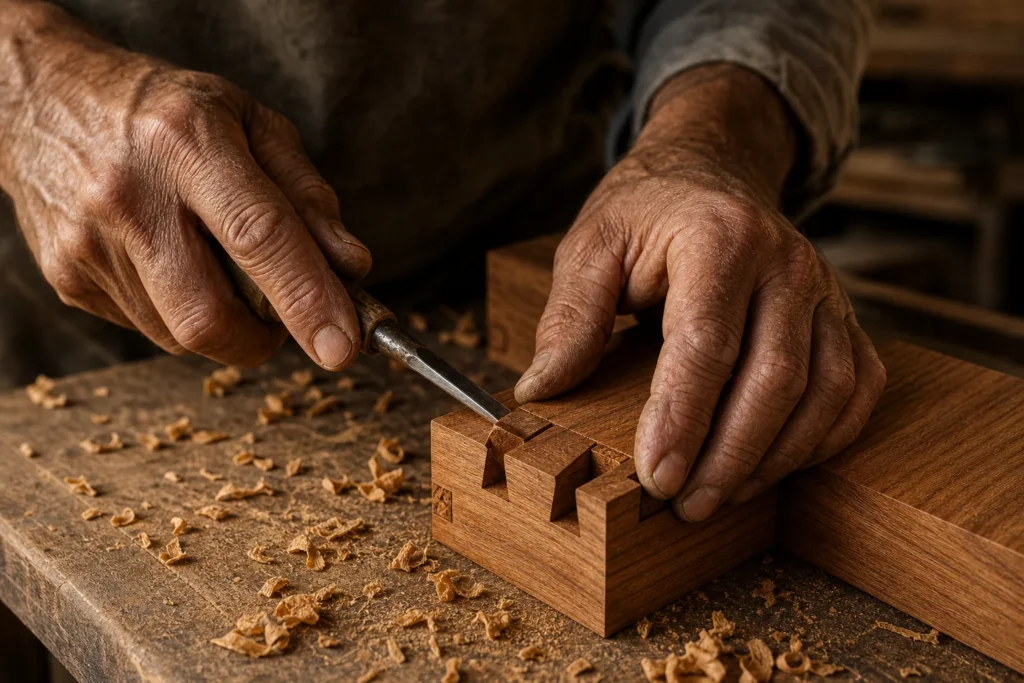
Mortise-and-tenon joints, where one piece of wood is carved to fit precisely into a slot in another, distribute that stress evenly and hold for decades without loosening. Dowel joints, reinforced with wood glue, are the next best option and common in mid-range chairs. At the low end, chairs held together mostly with screws, staples, or metal brackets tend to develop squeaks and wobble within a year of daily use, because metal fasteners work loose as wood expands and contracts with weather.
Hand-fitted joinery takes longer and costs more in skilled labor, which is part of why handcrafted teak furniture carries a higher price tag than factory-stamped alternatives. It’s the same reasoning behind why teak wood furniture is priced higher overall compared to mixed-material options: the labor and material both cost more, but so does the lifespan you get in return.
3. Cushioning and Upholstery Choices
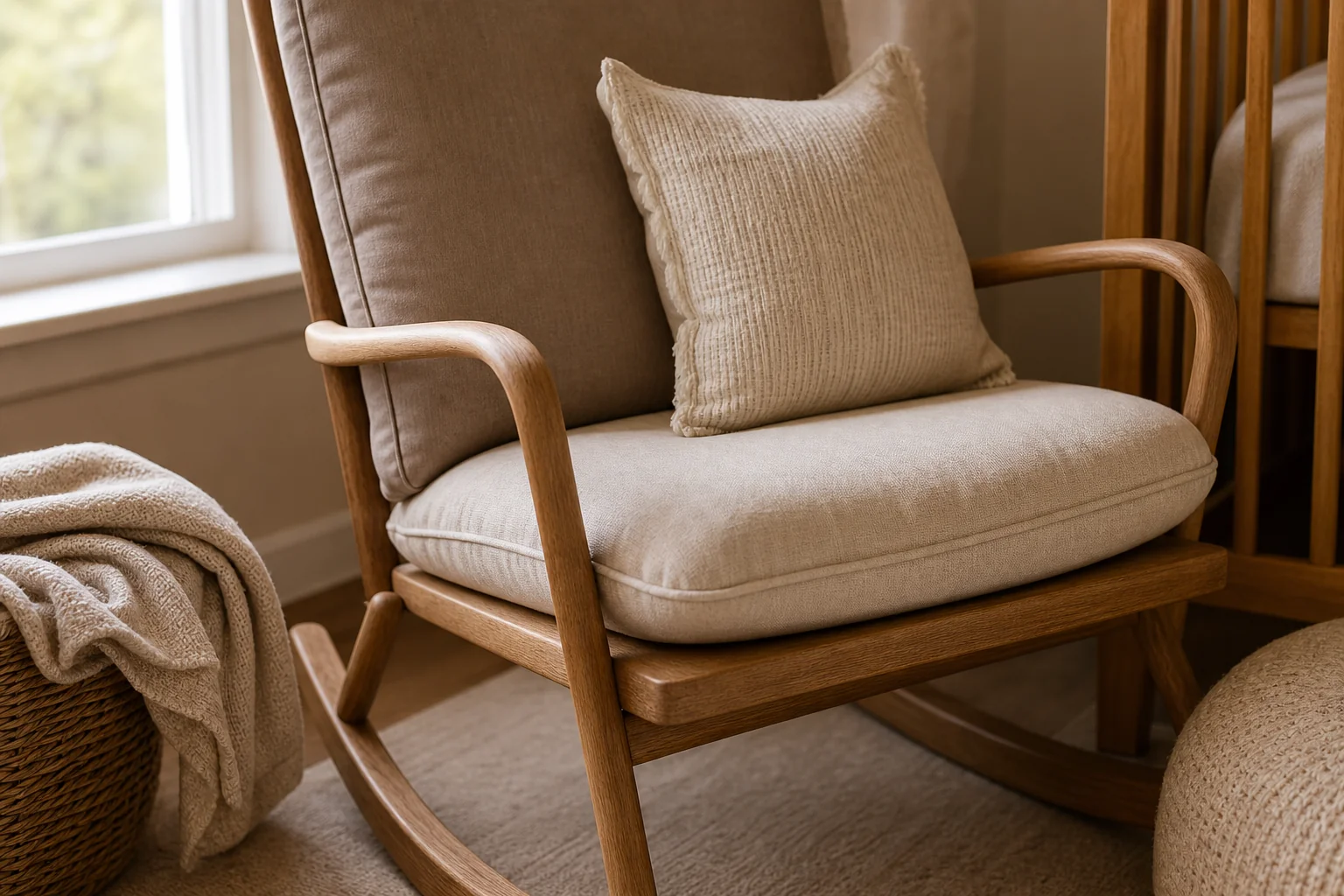
Cushioning changes both comfort and price more than most buyers expect. A basic rocking chair might ship with a thin foam pad and a printed cotton cover, while a premium version uses high-density foam that holds its shape after years of daily sitting, paired with a removable, washable cover in a more durable weave.
For young parents shopping for a nursery, cushioning quality matters even more. Feeding sessions can run 20-40 minutes several times a day, and a chair with poor lumbar support or thin padding becomes uncomfortable fast. Removable covers also matter practically, since spit-up and spills are inevitable in a nursery setting. If safety and comfort for a child’s room is your main concern, our piece on how to choose safe wooden furniture for kids’ rooms covers edge rounding, weight limits, and stability checks specific to nursery furniture.
4. Finish and Protective Coating
The finish applied to a teak rocking chair affects both its look and its lifespan. A natural oil finish, like teak oil or Danish oil, penetrates the wood and enhances its grain while letting it breathe, which suits indoor use in living rooms and nurseries. Lacquer finishes create a harder surface but can crack over time if the wood underneath expands and contracts with seasonal humidity.
If you’re considering a rocking chair for a balcony or covered porch, look specifically for UV and moisture-protected finishes designed for outdoor exposure. These cost more but prevent the fading and surface damage that comes with direct sun and monsoon dampness, something covered in more depth in our guide to teak wood vs rattan furniture for humid coastal homes.
Reapplying oil finish every 6-12 months keeps a teak rocking chair looking new for generations, and our guide on how to maintain teak wood furniture at home has the exact steps and schedule.
5. Design Complexity and Size
Straight spindle backs and simple armrests keep manufacturing time down and prices lower. Curved backs, carved armrests, and wider proportions for larger seating all add labor hours, since curved teak pieces often need to be steam-bent or carved from thicker stock rather than cut straight from a plank.
Some rocking chairs also include gliding mechanisms instead of a traditional curved rocker base. Gliders use a track-and-bearing system for a smoother, quieter motion, popular in nurseries, but the added hardware and precision fitting push the price up further. Larger chairs built for taller adults or wider seating naturally use more wood, which also shows up in the final price.
Teak vs Cheaper Alternatives: A Side-by-Side Comparison
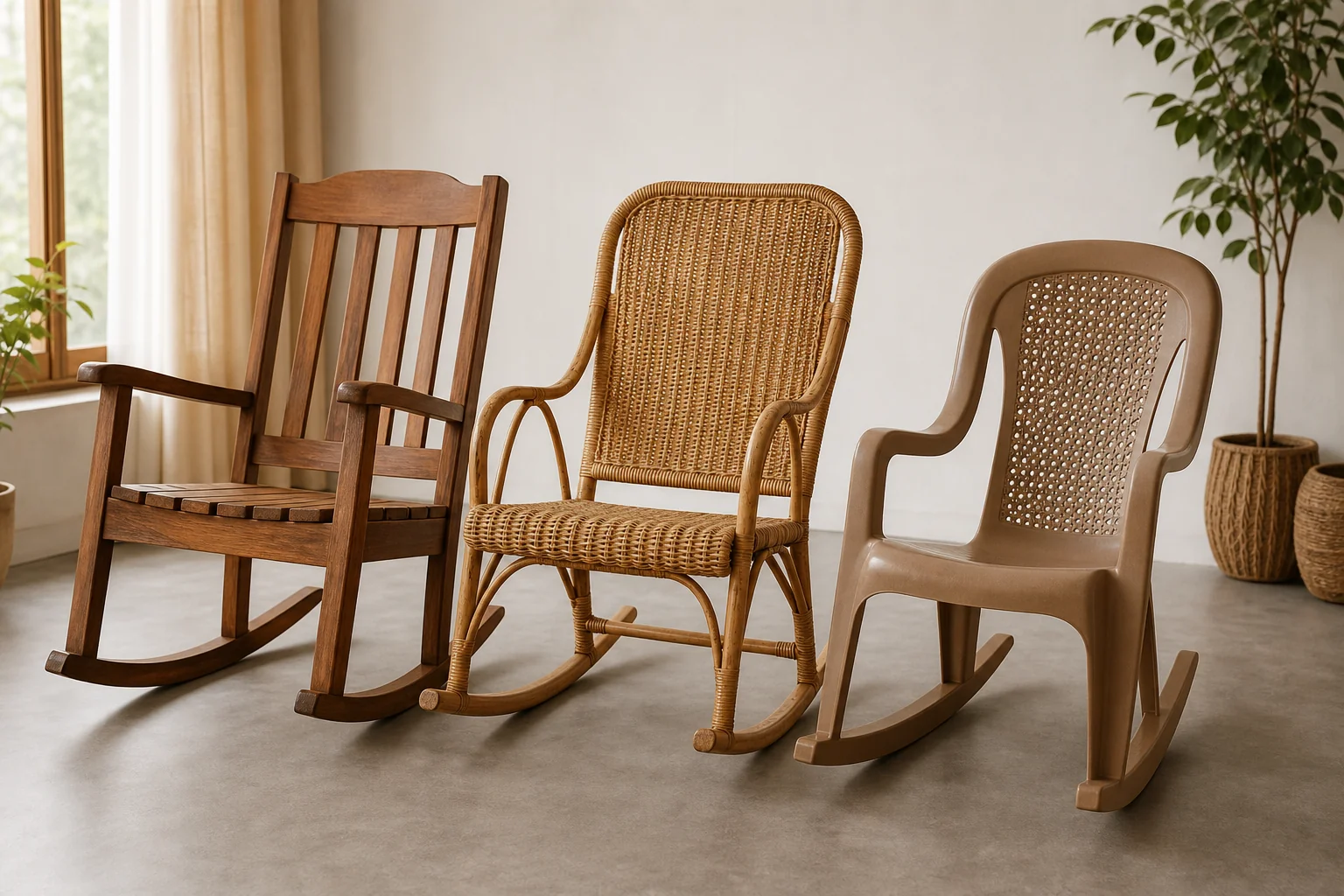
Buyers often compare a solid teak rocking chair against rattan, engineered wood, or plastic options that look similar in photos but behave very differently over time. Here’s how they stack up.
| Material | Typical Price | Expected Lifespan | Humidity Resistance | Best Use |
|---|---|---|---|---|
| Solid teak wood | ₹18,000-₹55,000 | 25+ years | Excellent | Living room, nursery, covered outdoor |
| Engineered wood (with teak veneer) | ₹8,000-₹18,000 | 3-6 years | Poor to moderate | Short-term or budget indoor use |
| Rattan/cane | ₹6,000-₹20,000 | 5-10 years | Moderate | Accent seating, covered indoor spaces |
| Plastic/resin | ₹2,500-₹7,000 | 2-5 years | Good but degrades in UV | Casual outdoor, budget picks |
Engineered wood chairs often use a thin teak veneer glued over particleboard or MDF. They look identical to solid teak in listing photos but swell or delaminate once moisture gets into an exposed edge or joint. For a deeper breakdown of this exact comparison across furniture categories, see teak wood vs engineered wood furniture: a detailed guide.
Budgeting for a Rocking Chair in Bhopal and Beyond
Furniture shoppers in Bhopal face a specific challenge: local markets carry limited variety in solid wood rocking chairs, with most retailers stocking either mass-produced imports or chairs labeled “sheesham” or “teak finish” that aren’t actually teak underneath. Buying online from a specialist seller with clear product photos, wood certification, and doorstep delivery removes much of that guesswork.
Beyond Bhopal, the same price logic holds across Indore, Bengaluru, Mumbai, Pune, and other major cities TeakLab ships to. Expect delivery timelines of roughly 1-3 weeks depending on your city and whether the chair is a stock design or a custom order. Budgeting an extra ₹2,000-₹4,000 above the base chair price for delivery, assembly, and any add-on cushioning is a realistic buffer for most orders.
If you’re furnishing a full room rather than just one chair, it helps to see how a rocking chair’s price factors compare to related pieces, like our cost breakdowns on teak wood dining table pricing or teak wood sofa set price factors, since wood grade and joinery quality drive costs the same way across categories.
How to Choose Safely for a Nursery or Living Room
For living room use, prioritize a stable, wide rocker base and a finish that matches your existing wood tones. For nursery use, a few extra checks matter:
- Weight capacity: Confirm the chair supports the weight of an adult plus a baby comfortably, with margin.
- Rounded edges: Armrests and back edges should be smooth and rounded, not sharp-cornered.
- Stability test: The chair shouldn’t tip or feel unsteady when rocked at full range with weight on it.
- Low-maintenance cushions: Removable, washable covers save real effort over months of feeding sessions.
Solid teak checks most of these boxes naturally, since its density and joinery strength give it a stability that lighter materials struggle to match.
Frequently Asked Questions
What is a fair price for a solid teak rocking chair?
Most genuine solid teak rocking chairs fall between ₹18,000 and ₹55,000. Anything significantly below that range likely uses mixed wood, sapwood, or a thin teak veneer rather than solid heartwood throughout.
Does cushioning add much to the price?
Cushioning typically adds ₹1,500 to ₹6,000, depending on foam density and fabric quality. Removable, washable covers cost more but reduce long-term maintenance, especially useful in a nursery.
Is a teak rocking chair safe for a baby’s nursery?
Yes, as long as it has rounded edges, a stable wide base, and a non-toxic finish. Check our guide on choosing safe wooden furniture for kids’ rooms before ordering.
How long does a solid teak rocking chair last?
With basic maintenance like periodic oiling, a well-built solid teak rocking chair can easily last 25 years or more, often getting passed down as a family piece rather than replaced.
A rocking chair sees more daily motion and stress than almost any other seat in the house, which makes wood grade and joinery quality far more important than they might seem in a product photo. If you’re ready to compare options built on plantation-grown teak with hand-fitted joinery, you can shop the collection and filter by cushioning and finish to match your living room or nursery. Found a design you like? You can select options to customize fabric and finish, take a quick view to check dimensions, or go ahead and add to basket to start budgeting your order today.