Blog
Is Teak Wood Furniture Really Termite Proof?
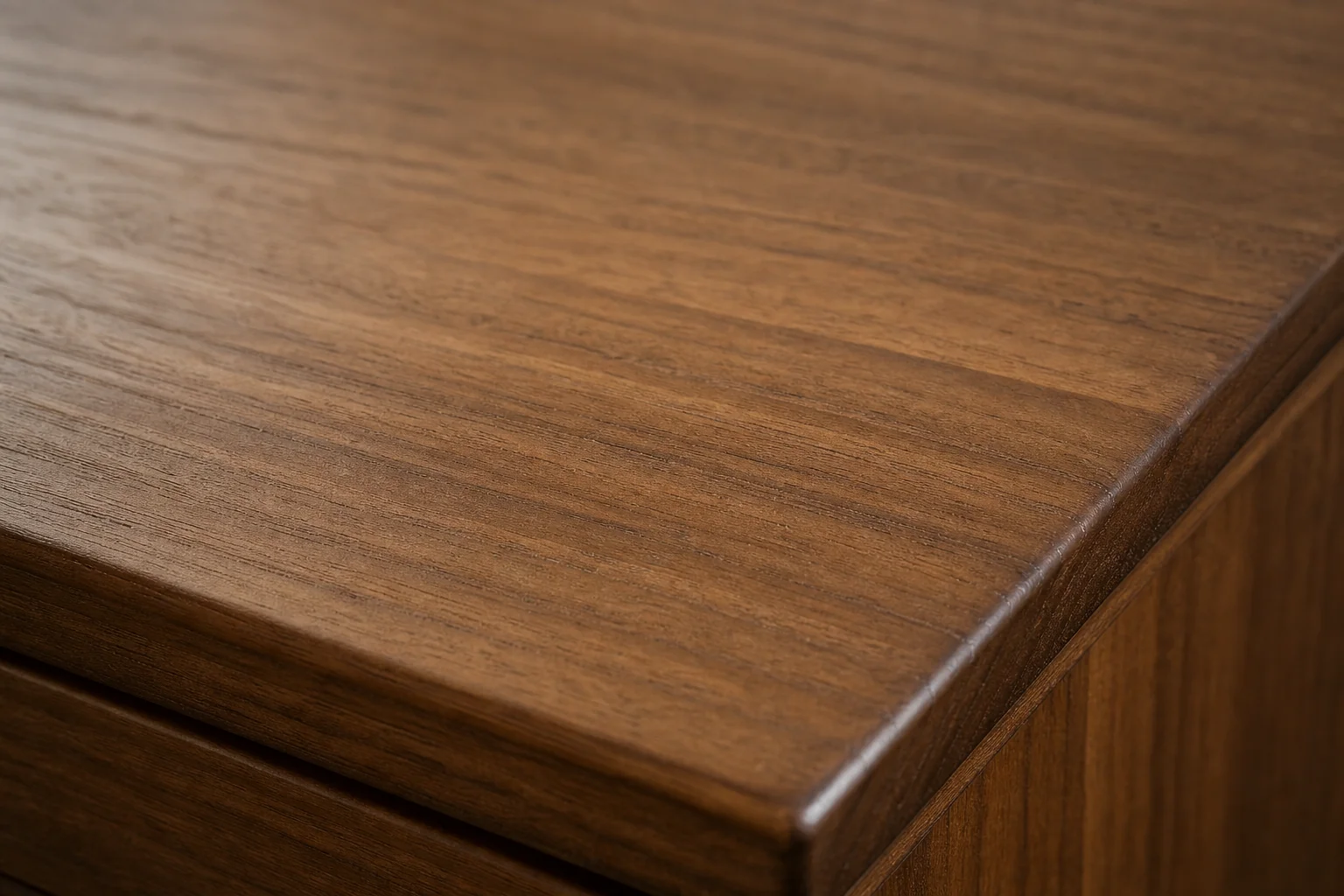
Teak wood furniture is not 100% termite proof, but it comes closer than almost any other timber sold in India. Its heartwood contains natural oils, resins, and a rubbery compound called caoutchouc that make it unappetizing and hard to digest for termites. That is a fundamentally different kind of protection than the chemical sprays used on cheaper woods, and it does not wash off or wear out the way those treatments do.
Key Takeaways
- Natural, not chemical, resistance: Teak’s oils and silica content repel termites biologically, so the protection lasts as long as the wood itself, unlike sprayed-on treatments.
- Not fully immune: Sapwood (the pale outer layer of the log) has little natural resistance, so poorly crafted furniture with leftover sapwood can still get attacked.
- Big gap over other woods: Solid heartwood teak outperforms sheesham, mango wood, pine, and engineered wood by a wide margin on termite resistance and overall lifespan.
- Climate matters: Bhopal’s dry summers followed by humid monsoons create ideal termite breeding conditions, which makes natural resistance more valuable here than in drier regions.
- Maintenance still counts: Annual inspection, occasional oiling, and keeping furniture off damp floors preserve teak’s natural defenses for decades.
At a Glance: Teak Wood Furniture and Termite Resistance
| Wood Type | Termite Resistance | Typical Lifespan | Maintenance Needed |
|---|---|---|---|
| Solid Teak (Heartwood) | Very High (natural oils) | 50-100 years | Low – occasional oiling |
| Teak with Sapwood Included | Moderate | 20-40 years | Medium – watch edges |
| Sheesham Wood | Moderate | 15-25 years | Medium – periodic treatment |
| Mango Wood | Low | 8-15 years | High – needs chemical treatment |
| Engineered/Plywood | Low to None | 8-15 years | High – laminate can peel, exposing core |
| Pine (Untreated) | Very Low | 5-10 years | High – requires regular pest treatment |
Is Teak Wood Furniture Termite Proof or Not?
Teak wood furniture is naturally termite resistant, not termite proof. The heartwood, cut from the mature center of the tree, is dense and saturated with natural oils that deter termites from feeding on it. No wood on earth is fully immune to every pest under every condition, but teak heartwood comes about as close as solid timber gets without chemical intervention.
The distinction between heartwood and sapwood matters here. Heartwood is the older, darker inner wood, rich in the oils and silica that give teak its reputation. Sapwood is the pale, younger outer ring of the log, and it carries almost none of that natural protection.
A well-made teak furniture piece uses only heartwood. A poorly made one, often sold at a lower price to cut costs, may include strips of sapwood along edges or hidden inside joints. That sapwood is the weak point where termites can actually get a foothold.
What Makes Teak Naturally Termite Resistant?
Teak’s resistance comes down to three natural compounds working together: aromatic oils, silica deposits in the grain, and a rubbery latex called caoutchouc. Termites avoid feeding on wood that carries these compounds because they interfere with digestion, which is why teak survives conditions that would destroy softer timber within a few years.
These oils also repel moisture, and moisture is what draws termites to wood in the first place. A damp wooden beam or table leg signals easy access to a termite colony. Teak’s oil content keeps internal moisture low even in Bhopal’s humid monsoon months, which removes much of that signal.
Compare this to chemically treated woods like pine or mango wood. Manufacturers apply borate or other pesticide treatments to the surface or through pressure injection. Those treatments work, but they degrade over time, especially with sanding, refinishing, or prolonged sun exposure. Teak needs no such treatment because the protection is built into the wood itself, all the way through.
Teak vs Other Woods: How Does It Really Compare?
Buyers comparing teak wood vs engineered wood furniture often assume both need similar upkeep. They do not. Engineered wood relies on adhesives and laminate layers that can peel or swell, exposing the particle core underneath to both moisture and termites.
Sheesham, popular across North and Central India, is denser than mango wood but still lacks teak’s oil content. It needs periodic pest treatment, especially in humid regions, to match even a fraction of teak’s natural defense.
For families weighing rattan against solid wood, the calculus shifts again. Rattan is a plant fiber, not timber, so termite risk works differently; it is more prone to insect damage in constant dampness but resists warping better in dry heat. Anyone deciding between the two for a Mumbai balcony or a Bhopal patio should read our comparison on teak wood vs rattan furniture before committing to either.
Where Teak Furniture Can Still Be Vulnerable
Even genuine teak furniture has three real weak points. First, leftover sapwood in cheaply made pieces gives termites an entry point that spreads inward over time. Second, poorly cut joints trap moisture where two pieces meet, softening the wood locally even if the surrounding grain resists.
Third, furniture placed directly on damp concrete, tiled flooring without ventilation, or against a wall with rising damp loses some of its natural advantage. Termites do not need much moisture to establish a colony, and constant ground contact removes teak’s built-in dryness.
Why This Matters More in Bhopal and Central India
Bhopal’s climate swings from dry, dusty summers to a genuinely humid monsoon between June and September. That seasonal shift, common across the wider service area including Indore and Pune, is exactly the pattern that favors termite activity: dry soil cracks open access points, then monsoon moisture feeds the colony.
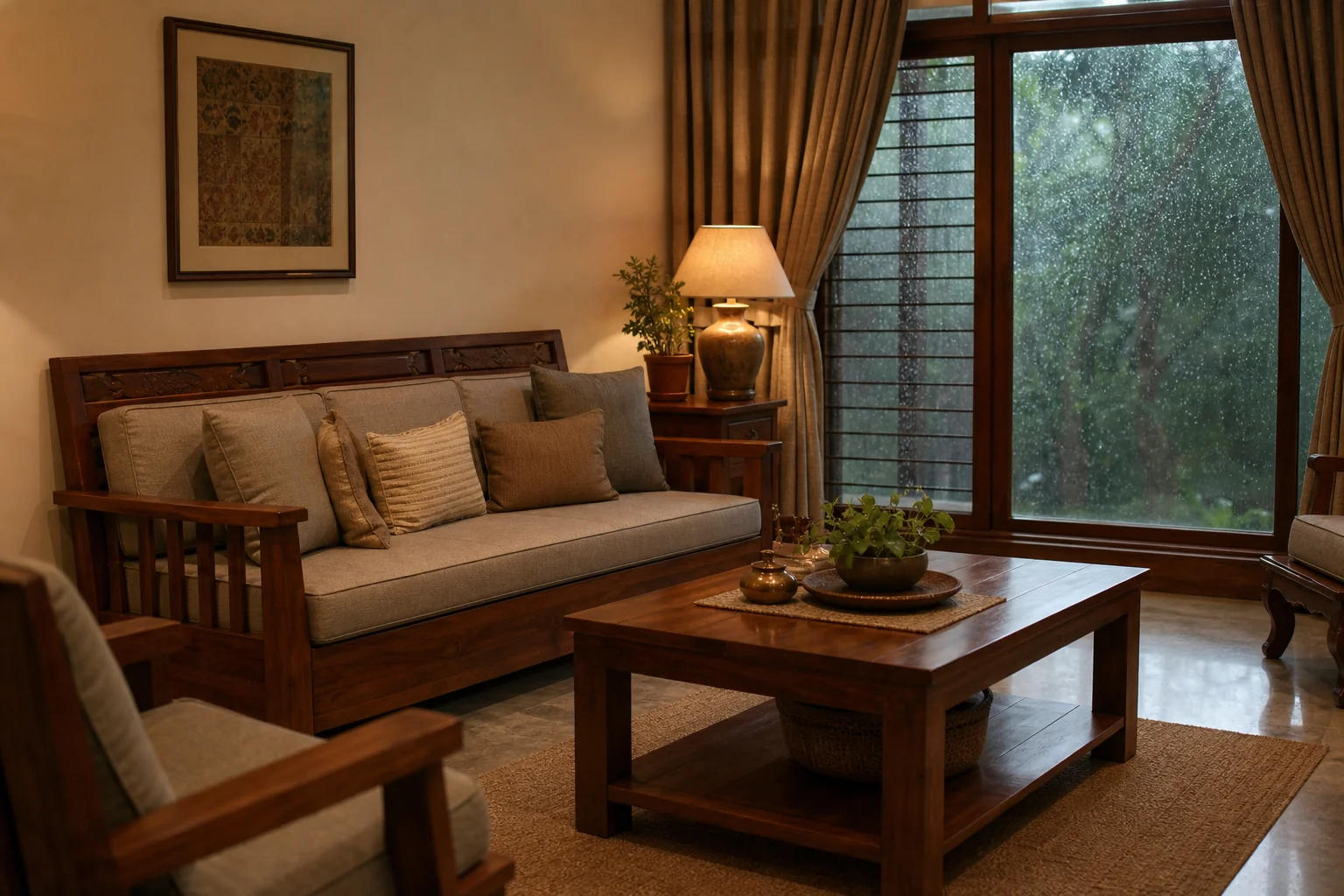
Older homes in and around Bhopal often mix furniture types accumulated over years, sometimes including untreated local timber that already carries termite activity. Solid teak furniture placed nearby is not automatically at risk, since termites target the wood they can digest, but keeping any infested piece in the same room is worth avoiding regardless of what your other furniture is made from.
For families here, the practical takeaway is that solid teak furniture is a genuine long-term investment against local pest pressure, not just a style choice. Explore our teak bedroom furniture sets for Bhopal homes if you are furnishing a room from scratch with this climate in mind.
How to Choose Genuine Termite-Resistant Teak Furniture
Choosing furniture that actually delivers on teak’s termite resistance starts with verifying it is heartwood, not a mix that includes sapwood, before you buy. A few checks make this manageable even when shopping online.
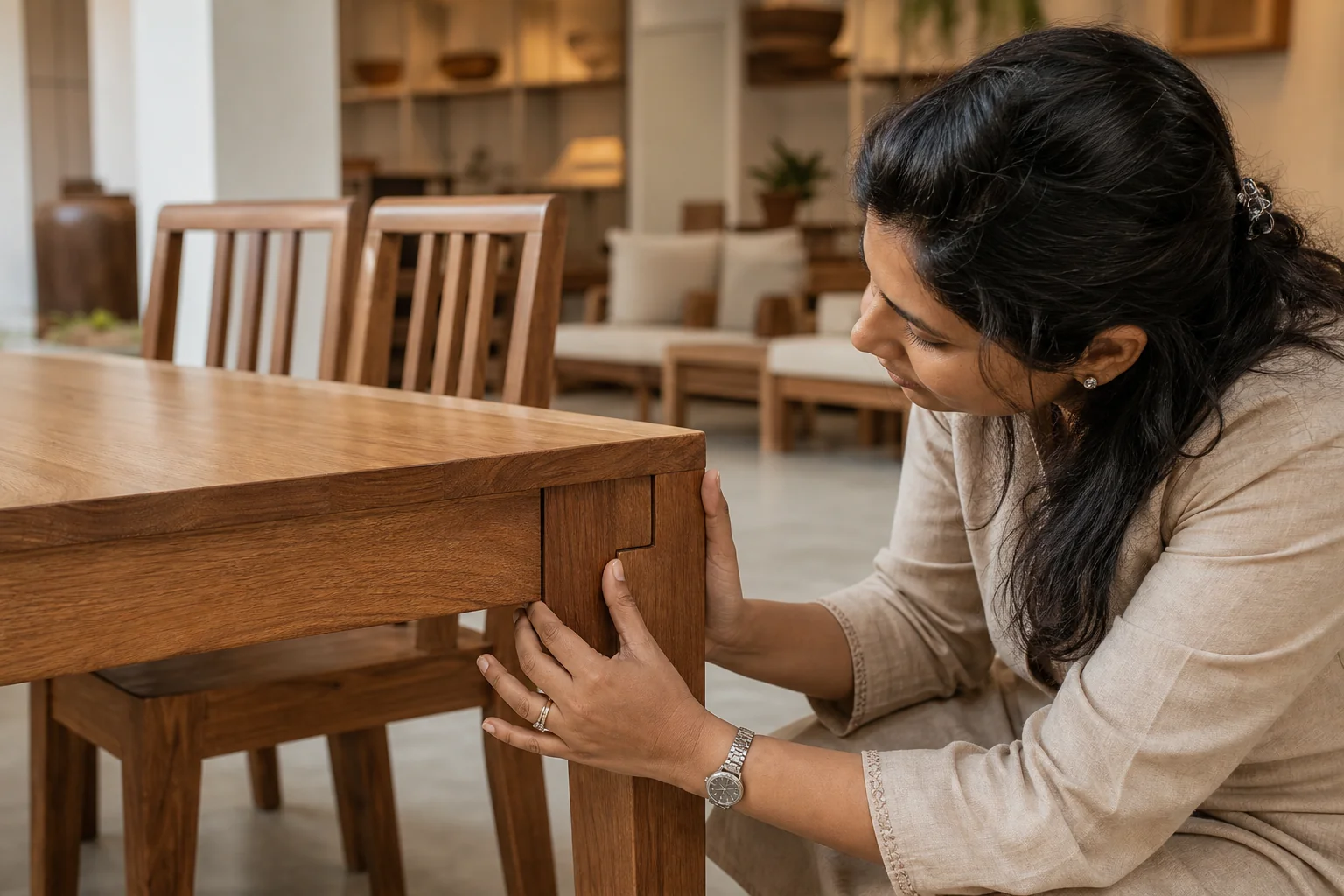
- Ask for the wood grade: Reputable sellers specify Grade A teak heartwood rather than a vague “teak wood” label that could include lower grades.
- Check the grain color: Genuine heartwood shows a consistent golden-brown to dark brown tone. Pale streaks running through a panel usually indicate sapwood.
- Inspect joint quality: Look for tight mortise-and-tenon or dovetail joints in product photos, since gaps at joints are where moisture and termites both get in.
- Request sourcing details: Plantation-grown teak from reputable regions tends to have more consistent heartwood ratios than mixed or unverified sources.
If you want a full step-by-step verification process, our guide on how to check real teak wood before buying furniture walks through each test, from the weight of the piece to how it responds to a water drop.
How to Keep Teak Furniture Termite Free for Generations
Natural resistance is not an excuse to skip maintenance entirely. A little care keeps that resistance working at full strength for the decades teak is capable of lasting.
- Oil it periodically: A light coat of teak oil every six to twelve months replenishes surface oils lost to cleaning and sun exposure.
- Avoid direct floor or wall contact: Use furniture pads or small risers, especially in ground-floor rooms prone to dampness.
- Inspect after monsoon: Check the undersides of tables, bed frames, and wardrobe backs each October for any soft spots or mud tunnels, the telltale sign of termite activity.
- Keep infested items separate: Never store a suspected termite-infested wooden object near your teak pieces, even temporarily.
For the complete home care routine, including cleaning products to avoid and how often to dust versus deep clean, see our detailed guide on how to maintain teak wood furniture at home. And if durability across decades is your main concern, we cover that timeline fully in our guide on teak bunk beds for kids’ rooms, where longevity and safety both matter for growing families.
Frequently Asked Questions
Does teak furniture need extra termite treatment?
No, genuine heartwood teak furniture does not need chemical termite treatment because its natural oils already provide long-lasting resistance. Additional pesticide treatment is more relevant for softer woods like pine, mango wood, or sheesham that lack teak’s built-in protection.
Can termites attack teak outdoor furniture?
Termites can still attack teak outdoor furniture if it contains sapwood, sits in constant ground contact, or has cracked, unprotected joints exposed to soil moisture. Well-finished, elevated outdoor teak pieces with sealed joints face far lower risk than budget alternatives.
Is teak better than plywood for termite resistance?
Yes, solid teak heartwood is significantly more termite resistant than plywood, since plywood’s layered adhesive construction can separate under humidity and expose the core to pests. Teak’s resistance is built into the solid grain rather than a surface coating.
How long does teak’s natural termite resistance last?
Teak’s natural resistance lasts as long as the wood itself, often 50 to 100 years, because the protective oils are distributed throughout the heartwood rather than applied as a surface treatment. Regular oiling helps maintain surface-level protection but the internal resistance does not expire.
What is the difference between teak and rattan for pest resistance?
Teak resists termites through natural oils in solid wood, while rattan is a woven plant fiber that faces different pest risks, mainly borers and mold in constant damp conditions. Homes choosing between the two, especially in humid coastal or monsoon-heavy cities, should weigh moisture exposure alongside pest resistance.
Solid teak’s termite resistance is real, but it is not a substitute for good craftsmanship. A poorly built piece in premium wood can still fail where a well-made piece in decent wood holds up for decades.
If you are ready to furnish your home with furniture built to actually last, shop the collection of solid heartwood teak pieces designed for Bhopal’s climate and beyond. Browse dining sets, bedroom furniture, and outdoor pieces, then select options that match your space, or take a quick view of any product to check wood grade and joinery details before you decide. When you find the piece that fits your home, add it to basket and start building furniture that your grandchildren will still be using.