Blog
How to Fix Squeaky Wooden Furniture Joints at Home
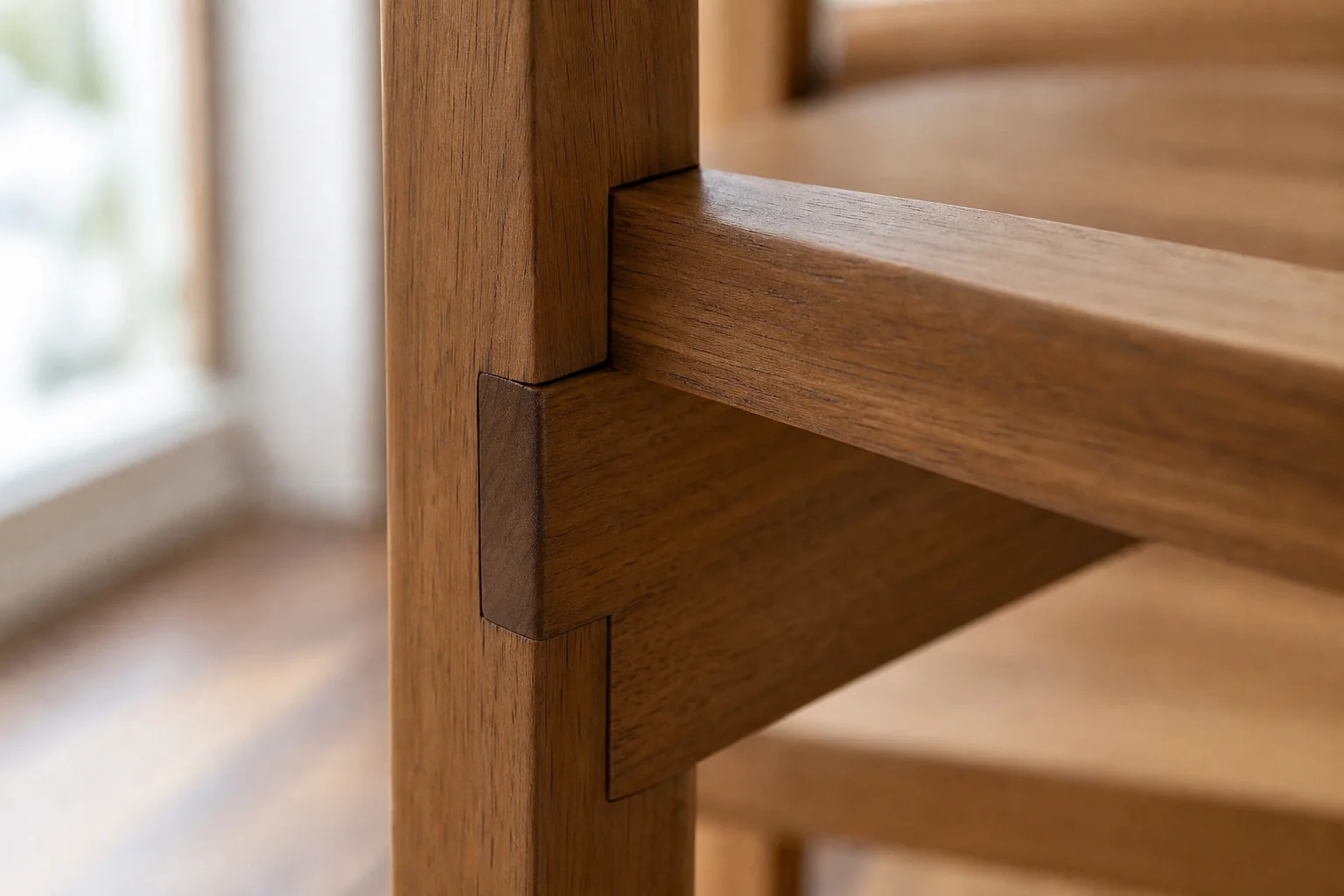
That creak from your dining chair every time someone leans back isn’t random. It’s wood telling you a joint has loosened, and knowing how to fix squeaky wooden furniture joints means catching that signal before a leg splits or a rail cracks. Most squeaks are fixable at home in under an hour with basic tools, glue, and a bit of patience.
Key Takeaways
- Root cause: Squeaks almost always come from wood shrinking or expanding with humidity, loosening the glue bond inside mortise-tenon or dowel joints.
- First fix: Tightening screws and re-gluing loose joints solves roughly 80% of squeaky furniture cases without any special tools.
- Lubrication matters: A thin rub of paraffin wax on wood-to-wood contact points quiets friction without damaging finishes, unlike oil-based sprays.
- Climate factor: In cities like Bhopal, where humidity swings sharply between the dry season and monsoon, solid wood furniture needs a joint check twice a year.
- Know your limit: Cracked joinery, split rails, or heirloom pieces call for a professional carpenter rather than a DIY glue job.
At a Glance: Squeaky Joint Fixes
| Cause | Common Location | Fix | Tools Needed | DIY or Professional |
|---|---|---|---|---|
| Loose screws/bolts | Chair seats, table aprons | Tighten or replace with slightly thicker screw | Screwdriver, drill | DIY |
| Dried-out glue in dowel joints | Chair legs, bed frames | Disassemble, re-glue with wood glue | Wood glue, rubber mallet, clamps | DIY |
| Wood-to-wood friction | Drawer runners, rocking chair rockers | Apply paraffin wax | Candle or paraffin wax block | DIY |
| Worn mortise-tenon joint | Dining chairs, wooden sofas | Add wood filler/toothpicks and re-glue | Wood filler, glue, clamps | DIY (minor) / Pro (major) |
| Cracked or split joint | Any load-bearing joint | Reinforce or replace part | Carpenter tools | Professional |
| Humidity-driven shrinkage | Whole frame | Humidity control, seasonal tightening | Hygrometer, wax/oil finish | DIY |
Why Do Wooden Furniture Joints Start Squeaking?
Wooden furniture squeaks because the joints depend on friction and glue, and both weaken as wood expands and contracts with moisture. Every time humidity rises or drops, the wood fibers swell or shrink slightly, and over years that repeated movement pulls apart the tight bond inside a dowel or mortise-tenon joint.
The squeak itself is simply two wood surfaces (or a wood surface against a metal screw) rubbing where they used to sit flush. It’s not always a defect. Even genuine solid teak wood moves with the seasons, because it’s a natural material, not a synthetic slab.
Cities with sharp seasonal humidity shifts see this more often. Bhopal’s dry winters followed by a heavy monsoon put real stress on wood joints, and homeowners across Madhya Pradesh, as well as buyers in Indore, Pune, and Bengaluru, report the same pattern: furniture that was silent in April starts creaking by August. This isn’t unique to cheap furniture. It happens to well-built pieces too, though quality joinery and denser woods like teak resist it far longer than softwoods or particle board.
Glued joints also fail with age simply because wood glue has a service life. Old hide glue or PVA bonds used decades ago dry out, crystallize, and lose their grip, even without any humidity swing at all.
1. Identify Where the Squeak Is Coming From
Before reaching for glue or a screwdriver, find the exact joint that’s moving. Sit in the chair or press down on the furniture piece slowly, and listen for where the sound originates rather than guessing.
- For chairs: rock gently side to side and front to back while a second person listens under the seat.
- For tables: press down on each corner one at a time.
- For beds: sit at different points along the frame and headboard connection.
- Mark the suspect joint with a pencil dot or a small piece of tape so you don’t lose track once you flip the furniture over.
Flip the piece upside down on a soft towel or blanket to protect the finish, and inspect the marked joint closely. Look for a visible gap, powdery old glue residue, or a screw head that spins freely instead of biting into wood.
2. Tighten Loose Joinery Safely
Fixing a squeaky wooden furniture joint usually starts with tightening what’s already there. Check every screw and bolt at the joint first, since a quarter-turn with a screwdriver often stops the noise instantly and costs nothing.
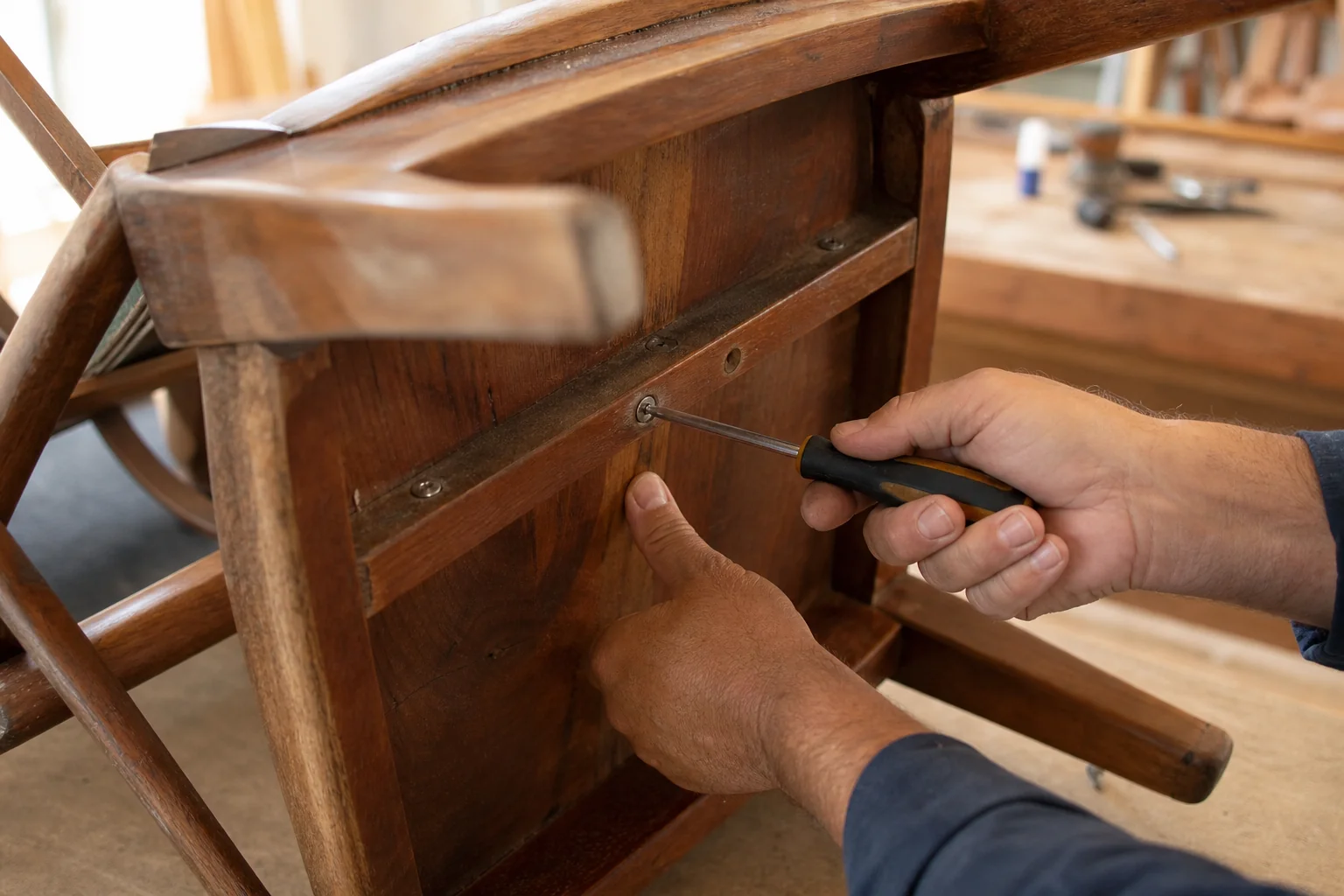
If a screw spins without gripping, the hole has worn oversized. Don’t just force a bigger screw in blindly. Instead, pack the hole with a few wooden toothpicks or a matchstick dipped in wood glue, snap them flush, let it dry for 20 minutes, then drive the original screw back in. This rebuilds the wood fiber the screw needs to bite into.
For dowel or mortise-tenon joints that have separated, you’ll need to go further:
- Gently tap the joint apart with a rubber mallet if it’s already loose enough to wiggle.
- Scrape out old, crumbling glue with a small flathead screwdriver or thin wire brush.
- Apply fresh wood glue (PVA-based) inside the joint, spreading it around the full contact surface.
- Reassemble and clamp for the time stated on the glue bottle, usually 30 minutes to an hour for initial set, and 24 hours for a full cure.
Avoid overtightening screws on solid wood, since forcing metal past its holding point can split the grain instead of securing it. Solid teak is dense and forgiving, but even it has a breaking point if you crank a screw with a power drill on high torque.
3. Lubricate Moving Contact Points
Some squeaks aren’t about loose joints at all, they’re friction noise where two wood surfaces rub together under normal movement, like a rocking chair’s curved rockers or a drawer sliding on wooden runners. For these, lubrication solves the problem without any disassembly.
Rub a plain paraffin candle or a block of furniture wax directly along the contact surface. It’s a dry lubricant that reduces friction without staining fabric or leaving residue that attracts dust, unlike cooking oil or silicone spray, both of which can also damage a wood finish over time.
For drawer runners specifically, a light coat of beeswax polish works well and doubles as light conditioning for the wood. Never use WD-40 or similar petroleum sprays on furniture joints. They temporarily silence the squeak but soak into the wood grain and weaken the glue bond further, making the joint looser within weeks.
4. Fix Specific Squeaky Furniture Types
Dining chairs squeak most often at the point where the seat rail meets the back leg. Corner braces, small metal or wood triangles screwed into each internal corner, add significant rigidity and are a permanent upgrade over relying on the original joint alone.
Beds and cots usually creak at the headboard-to-frame bolts or the center support beam. Tighten bed bolts with an Allen key every few months, since bed frames flex nightly under body weight far more than any other furniture type. If you’re furnishing a child’s room, pair this maintenance habit with the safety checks in our guide on choosing safe wooden furniture for kids’ rooms.
Dining tables often squeak at the apron-to-leg brackets underneath. These are usually held by a few screws you can re-tighten in minutes.
Wooden sofas and lounge chairs with internal wood frames under cushions can develop the same issue at hidden joints. If your sofa is due for a broader once-over anyway, our piece on choosing a wooden sofa for small living rooms covers structural checks worth doing at purchase time.
5. Preventing Squeaks Before They Start
The easiest joint to fix is the one that never loosens. A few habits keep solid wood furniture quiet for years rather than months.
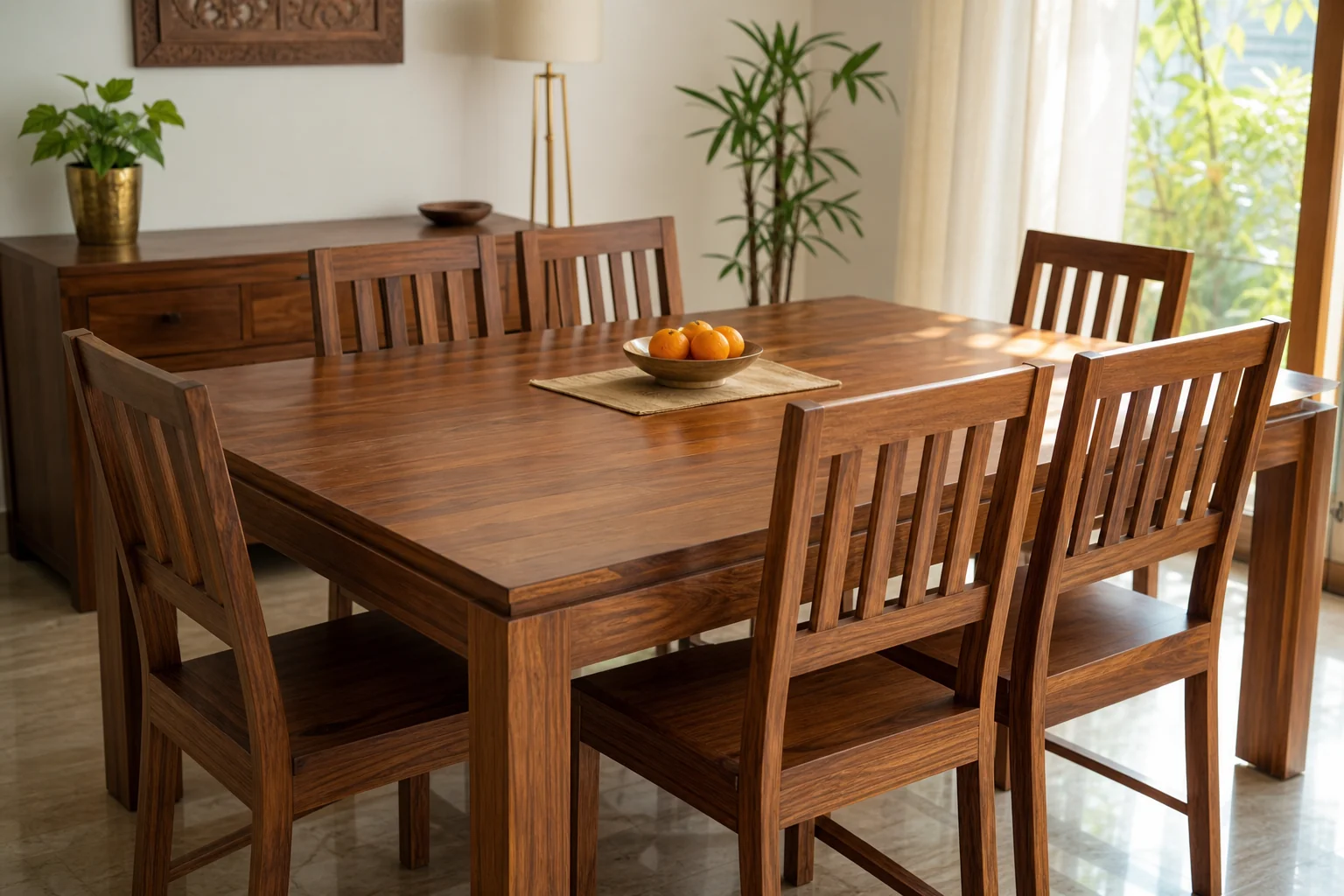
Keep indoor humidity as stable as you can, ideally between 40% and 60%. In Bhopal and much of Madhya Pradesh, that means running a dehumidifier or simply keeping windows managed during the peak monsoon months, since sharp humidity swings are the single biggest driver of joint movement in solid wood.
Add felt pads under any furniture that gets moved often, avoid dragging heavy pieces across the floor, and check bolts and screws on chairs and beds twice a year, ideally right before and right after monsoon season. For teak specifically, regular oiling and polishing also helps the wood hold its dimensional stability, which indirectly keeps joints tighter for longer; our detailed guide to maintaining teak wood furniture at home covers the full care routine beyond just joints.
When Should You Call a Professional Instead of DIY?
Call a professional carpenter when a joint has actually cracked or split, not just loosened, since glue alone cannot rebond broken wood fibers safely. The same applies to heirloom or antique furniture, where an amateur repair can permanently reduce its value and structural integrity.
Other signs it’s time to stop DIY-ing: the joint keeps loosening again within weeks of a re-glue, you notice the wood itself flexing or bowing rather than just the joint moving, or the furniture is under warranty and opening it up voids that coverage. A structural repair on a load-bearing joint, like a bed’s center support or a dining table’s main leg-to-apron connection, is also worth handing to a professional if you’re not confident using clamps and glue under pressure.
If repeated tightening simply won’t hold, the wood around the joint may have degraded enough that it needs a insert, a wood plug, or a partial rebuild, work that’s genuinely a carpenter’s job rather than a weekend project.
Frequently Asked Questions
Is a squeaky joint a sign of bad furniture quality?
Not necessarily. Even well-built solid wood furniture squeaks over time because wood naturally expands and contracts with humidity. Quality joinery and denser wood like teak simply delay the squeak, they don’t eliminate it forever.
Can I use WD-40 on wood furniture joints?
No. WD-40 and similar petroleum sprays quiet the noise temporarily but soak into the wood grain and weaken glue bonds further. Use paraffin wax or beeswax polish on wood-to-wood contact points instead.
How often should I check my furniture joints?
Twice a year is a practical routine for most homes, ideally once before monsoon and once after, since that’s when humidity swings put the most stress on solid wood joinery.
Does teak wood furniture squeak less than other wood types?
Generally yes. Teak’s natural oils and dense grain make it more dimensionally stable across humidity changes than softer woods like mango or rubberwood, so joints stay tighter for longer. It still needs the same periodic checks, just less frequently.
A squeak is early warning, not failure. Catching it while the fix is still a screwdriver and a tube of glue is what separates furniture that lasts decades from furniture that needs replacing in five years.
If your current furniture has moved past a simple fix, or you’re ready to invest in pieces built to resist this problem for decades, explore TeakLab’s solid teak dining sets, beds, and chairs built with traditional mortise-tenon joinery designed for Indian humidity swings. Shop the Collection to compare designs, or select options on a piece you’ve had your eye on and bring home furniture that stays quiet for the long haul. Already decided? Add to basket and get it on its way to your home in Bhopal or anywhere across our delivery network.