Blog
Is Teak Wood Furniture Eco-Friendly? Full Answer
Yes, teak wood furniture is eco-friendly when it comes from managed plantations rather than felled natural forests. Plantation-grown teak, harvested on a 20-25 year rotation from farmed land, is a renewable resource that avoids the deforestation linked to old-growth or illegally logged timber. The real question isn’t whether teak can be sustainable, it’s whether the specific piece you’re buying actually is.
Key Takeaways
- Source matters more than species: Plantation-grown teak (Tectona grandis farmed on managed land) is renewable; old-growth or illegally logged teak from natural forests is not.
- Look for documentation, not adjectives: Terms like “sustainably sourced” mean little without sourcing paperwork, plantation origin, or certification backing them up.
- Durability is a sustainability feature: Solid teak furniture built to last 50+ years reduces the replacement cycle that fills landfills with cheap, short-lived furniture.
- TeakLab sources exclusively plantation-grown teak and works with craftsmen who use every cut to minimize wastage.
- Comparisons help: Teak generally outperforms engineered wood and plastic furniture on long-term environmental impact, largely because of lifespan and repairability.
At a Glance: Teak Sustainability Facts
| Factor | Plantation Teak | Old-Growth/Forest Teak | Engineered Wood (MDF/Plywood) |
|---|---|---|---|
| Source | Managed farms, replanted after harvest | Natural forests, often unregulated | Wood particles + resin, mixed sourcing |
| Growth cycle | 20-25 years, replanted continuously | 50-80+ years, rarely replanted | N/A (manufactured) |
| Typical furniture lifespan | 40-60+ years with care | 40-60+ years with care | 7-12 years |
| Deforestation risk | Low, managed replanting | High if unregulated | Moderate, depends on sourcing |
| Repairability | High (sand, re-oil, re-polish) | High | Low, often discarded when damaged |
| Common certifications | FSC, plantation origin certificates | Often none or disputed | Varies, less standardized for furniture |
| End-of-life impact | Biodegradable, can be repurposed | Biodegradable | Resin content slows biodegradation |
Why Bhopal Buyers Keep Asking This Question
More homeowners in Bhopal are furnishing their first independent homes with a different mindset than their parents had. They want furniture that looks good in photos, but they also want to know it wasn’t cut from a rainforest to get there. That shift shows up constantly in customer questions: is teak wood furniture eco friendly, or is it just marketing dressed up to look responsible?
Part of the confusion comes from the furniture industry itself. Nearly every seller today claims to be “sustainably sourced” or “eco-conscious,” yet very few explain what that actually means for the wood in your dining table. A buyer in Bhopal comparing three online stores will see three different sustainability claims with zero supporting detail behind any of them.
The other part of the question is practical. Furniture in India often gets passed down between generations rather than replaced every few years. A dining set or bed frame bought today might still be in use by someone’s grandchildren. That long horizon makes the sourcing question matter more, not less, because a piece meant to last decades should come from a supply chain that can sustain itself over decades too.
Plantation-Grown Teak vs Forest-Felled Teak: The Core Difference
Teak comes from the tree species Tectona grandis, native to South and Southeast Asia. But where that tree grows changes everything about its environmental footprint. Plantation teak is grown on dedicated farms, often government-managed forestry programs in Indian states like Kerala, Karnataka, and parts of Madhya Pradesh, where trees are planted specifically for eventual harvest and replaced with new saplings after cutting.
This farmed model works on a rotation cycle of roughly 20 to 25 years. Growers plant, tend, and harvest teak the same way a farmer manages a crop, just on a much longer timeline. Because new trees go into the ground as older ones come out, the total forest cover and carbon stock stays relatively stable over time. It’s a renewable system by design.
Old-growth or forest-felled teak is a different story. This wood comes from mature trees in natural forests, sometimes decades or centuries old, that are not part of any replanting program. Myanmar teak, once prized for its density and color, became a global flashpoint for this exact issue. Unregulated logging in Myanmar’s natural forests drew sanctions and import restrictions from multiple countries, including the Environmental Investigation Agency’s ongoing monitoring of illegal timber trade, precisely because that wood wasn’t coming from anything sustainable.
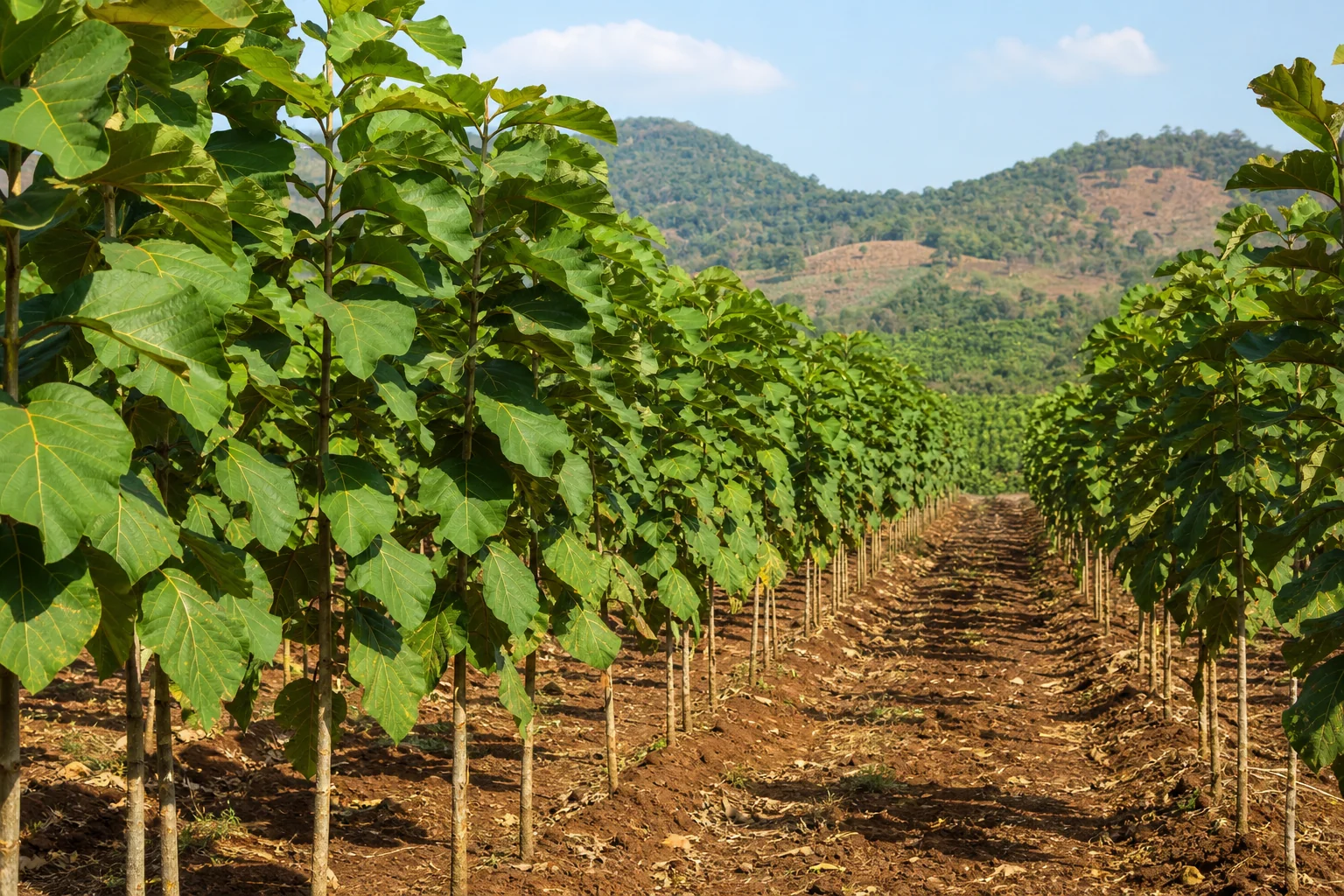
The takeaway for shoppers is simple: teak as a species isn’t the problem or the solution. Where it was grown, and whether that source gets replanted, is what determines whether your furniture is part of a sustainable cycle or a depleting one.
Does Growing Teak Actually Help the Environment?
Managed teak plantations do more than avoid harm. While actively growing, teak trees absorb carbon dioxide and store it in their wood, a process foresters call carbon sequestration. A well-run plantation keeps this cycle going continuously, since newly planted trees start absorbing carbon as soon as older ones are harvested and processed.
Plantation forestry also tends to stabilize soil in ways that unmanaged clear-cutting does not. Farms that rotate teak crops on fixed cycles usually maintain access roads, drainage planning, and replanting schedules that reduce the erosion risk you see with unregulated logging. That’s not to say plantation teak is a perfect environmental solution. Monoculture plantations can reduce local biodiversity compared to native mixed forests, and this is a legitimate criticism worth knowing about. But compared to the alternative, unmanaged deforestation of natural teak stands, a well-run plantation is the far safer option.
There’s also a durability argument that doesn’t get discussed enough. Furniture that lasts 40 or 50 years, properly maintained, keeps a tree’s worth of wood in active use for generations instead of ending up as landfill waste after a few years. Compare that to fast furniture made from particleboard or thin veneers, which typically gets thrown out within a decade. Every piece of solid teak furniture that survives multiple decades is effectively one less piece of furniture manufactured, shipped, and discarded during that same window. If you already own teak pieces, learning how to maintain teak wood furniture at home extends that lifespan even further, which is its own quiet form of sustainability.
Certifications and Claims Worth Checking Before You Buy
Not every “eco-friendly” label on a furniture listing means the same thing. Before trusting a sustainability claim, it helps to know what actual proof looks like.
What FSC Certification Means
The Forest Stewardship Council (FSC) is an international nonprofit that certifies timber harvested under strict environmental and social standards, including replanting requirements and protections for local ecosystems. FSC-certified wood comes with a chain-of-custody trail, meaning you can trace it from forest to final product. Not all plantation teak carries FSC certification, since certification is a costly and lengthy process, but its presence is a strong positive signal.
Plantation Origin Documentation
Even without formal FSC certification, a responsible seller should be able to tell you which state or plantation program the teak came from. In India, government forestry departments in states like Kerala and Karnataka run large-scale teak plantation programs, and reputable furniture makers often source directly from these managed forests. A seller who can name their source is behaving very differently from one who simply says “premium teak” with no further detail.
Red Flags to Watch For
- Vague language with no specifics: Phrases like “eco-friendly wood” or “responsibly sourced” without any mention of plantation origin, certification, or sourcing region.
- No answer when asked directly: If a customer service team can’t tell you where the wood comes from, that’s a warning sign, not a technicality.
- Suspiciously low prices for “solid teak”: Genuine plantation teak has a real cost. Extremely cheap “teak” furniture is often a teak veneer over cheaper wood or an entirely different species altogether. If you’re unsure how to tell the difference, this guide on how to check real teak wood before buying furniture walks through the physical tests that reveal the truth.
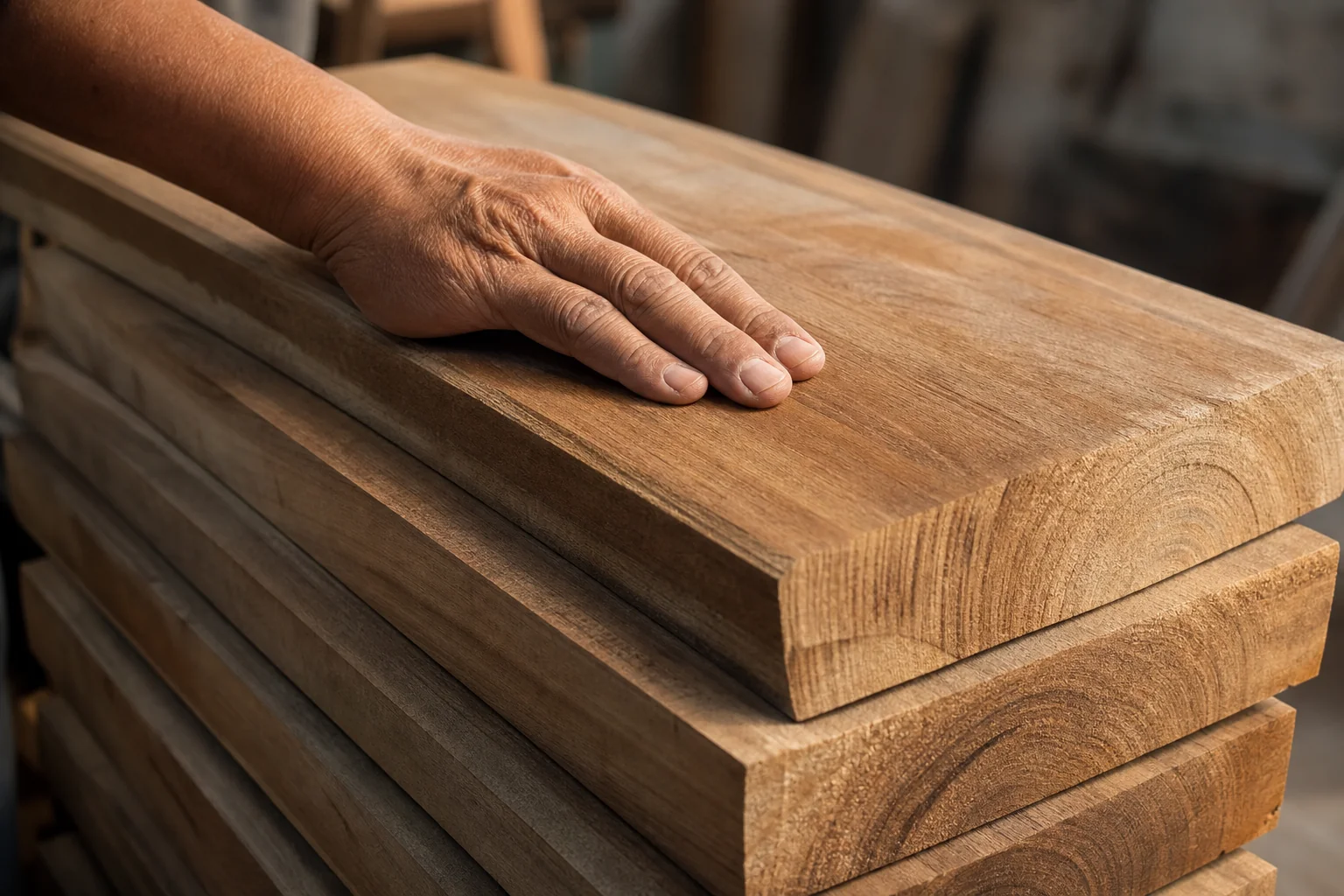
Asking a few direct questions before you buy takes less than five minutes and tells you far more than any marketing copy will. A furniture seller with nothing to hide will answer these questions plainly.
How TeakLab Sources Eco-Friendly Teak Wood
TeakLab works exclusively with plantation-grown teak, not wood pulled from unregulated forest logging. That distinction shapes every product in the catalog, from a simple bedside table to a full solid wood dining set. Because the wood comes from managed, replanted sources, the supply chain behind TeakLab furniture is designed to keep renewing itself rather than depleting a finite resource.
Sourcing responsibly is only half the picture. TeakLab’s craftsmen work in small batches rather than mass production lines, which allows offcuts and smaller wood sections to be repurposed into smaller items like stools, trays, or accent pieces instead of discarded as waste. This kind of full-utilization approach is common in traditional woodworking but often gets lost in large-scale factory production.
The other half of TeakLab’s sustainability story is simply durability. Solid teak furniture resists warping, cracking, and pest damage far better than composite alternatives, which means a TeakLab dining table or wardrobe is built to be used, repaired, and passed down rather than replaced every few years. That long lifespan is precisely why plantation teak works as a genuinely renewable material choice, not just a marketing angle. If you want to see this approach applied across a full catalog, you can shop the collection and compare pieces built on the same sourcing standard, whether you’re outfitting a living room in Bhopal or a home office in Indore.
Teak vs Other Materials: Which Is Actually Greener?
Sustainability comparisons only make sense when you look at the full lifecycle of a material, not just where it starts. Here’s how teak stacks up against the other materials Indian furniture buyers commonly weigh.
| Material | Renewability | Typical Lifespan | Repairability | End-of-Life Impact |
|---|---|---|---|---|
| Plantation Teak | High (managed replanting) | 40-60+ years | Excellent, can be sanded and re-oiled | Biodegradable |
| Engineered Wood (MDF/Plywood) | Moderate, depends on sourcing | 7-12 years | Poor, often unrepairable once damaged | Resin content limits biodegradability |
| Rattan/Cane | High, fast-growing vine | 10-15 years indoors | Moderate, weaving can be redone | Biodegradable |
| Plastic/Metal Composite | Low, fossil-fuel dependent | 10-20 years | Poor to moderate | Non-biodegradable (plastic) |
Engineered wood, often marketed as a budget-friendly or “modern” alternative, wears out far faster in India’s humid climate, particularly in monsoon-heavy cities. If you’re weighing the two options for a big furniture purchase, this detailed breakdown of teak wood vs engineered wood furniture covers exactly how each material performs over time. Rattan, meanwhile, is genuinely fast-renewing and works beautifully for accent chairs and indoor décor, though it doesn’t hold up as well as teak for heavy daily-use pieces. A closer look at teak wood vs rattan furniture shows where each material actually makes sense depending on the room and climate.
Plastic and metal composite furniture, common in budget outdoor sets, rely on fossil-fuel-derived materials and rarely biodegrade at end of life. None of these alternatives beat plantation teak on the combination of renewability, lifespan, and repairability together, which is really the full sustainability picture rather than just one factor in isolation.
Practical Steps: How to Verify Eco-Friendly Claims Before You Order
You don’t need a forestry background to shop responsibly. A short checklist covers most of what matters:
- Ask where the wood was grown. A specific state, plantation program, or region is a good sign. Silence or vague answers are not.
- Ask about certification. FSC certification is the clearest third-party proof available, though its absence doesn’t automatically mean a seller is dishonest, since many smaller plantation programs aren’t certified but still operate responsibly.
- Check the wood grade being used. Reputable sellers describe grading (A, B, or C grade teak) rather than hiding behind generic “premium” language.
- Look at the warranty and expected lifespan. A seller confident in their sourcing usually backs the furniture with a meaningful warranty, since low-quality wood fails fast and would make long warranties expensive to honor.
- Read the maintenance guidance provided. Sellers who explain proper care, oiling schedules, humidity handling, are usually the same sellers who take sourcing seriously too.
Running through this checklist before you commit to a large purchase, like a dining set or wardrobe, takes a few extra minutes but protects both your investment and your conscience. It also tends to reveal which sellers are simply repeating a buzzword and which ones can actually back it up.
Frequently Asked Questions
Is all teak furniture eco-friendly?
No. Teak sourced from unregulated natural forests, including some older Myanmar teak stock, is linked to deforestation. Teak grown on managed plantations with replanting programs is the sustainable option, and this is what responsible retailers like TeakLab source exclusively.
Is teak better than engineered wood for the environment?
Generally, yes, when you factor in the full lifecycle. Plantation teak furniture lasts 40 to 60 years or more, while engineered wood pieces typically need replacing within 7 to 12 years. Fewer replacement cycles mean less manufacturing, packaging, and landfill waste over time.
Does buying teak furniture contribute to deforestation?
It can, but only if the wood comes from illegal or unregulated logging of natural forests. Buying furniture made from certified or clearly documented plantation-grown teak avoids this risk entirely, since that wood comes from a managed, replanted system.
How long does plantation teak take to mature?
Most managed teak plantations in India run on a 20 to 25 year harvest cycle. Trees are replanted continuously, so the plantation as a whole keeps producing wood indefinitely rather than depleting a fixed forest area.
Is rattan more eco-friendly than teak?
Rattan grows faster and matures in a shorter cycle, which gives it a renewability edge. However, it has a shorter usable lifespan indoors and doesn’t hold up as well outdoors or under heavy daily use. Many homes end up using both materials for different purposes rather than choosing one exclusively.
What should I look for when buying teak furniture in Bhopal or nearby cities?
Ask the seller directly about plantation origin, wood grading, and whether they offer transparent product images and descriptions. Buyers across Bhopal, Indore, Bengaluru, Mumbai, and Pune increasingly expect this level of detail before ordering furniture online, and any seller unwilling to provide it is worth a second look.
Sustainable furniture isn’t about a single buzzword on a product page. It’s the combination of where the wood came from, how long the piece is built to last, and whether the seller can prove both.
If you’re furnishing a home in Bhopal, Indore, or anywhere else across India and want furniture built on genuinely responsible sourcing, TeakLab’s plantation-grown teak collections give you that assurance without the guesswork. Browse dining sets, wardrobes, beds, and study desks built from wood that’s replanted, not depleted, and made to last for decades rather than years. Shop the collection to compare pieces by wood grade and finish, or select options on a specific design to see sourcing details before you order. For a closer look at any single piece, use quick view to check dimensions and finish, and when you’ve found the one that fits your home, simply add it to your basket and check out with confidence that your furniture choice is genuinely eco-friendly, not just labeled that way.