Blog
How to Choose the Right Wooden Shoe Rack for Entryways
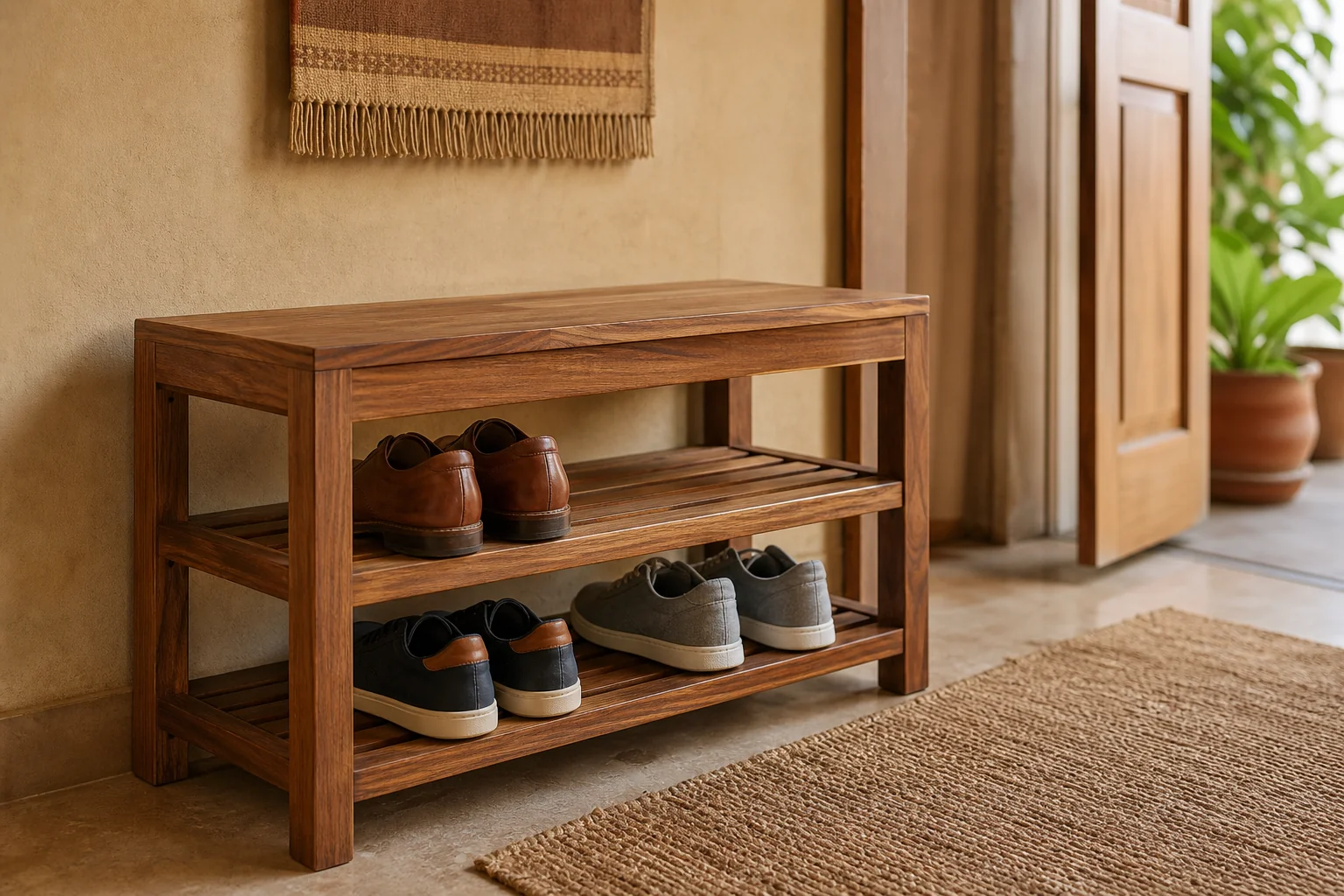
The right wooden shoe rack for an entryway is one that matches your household’s shoe count, fits the actual floor width available, and lets air move through slatted shelves so leather and canvas don’t turn musty. In Bhopal homes especially, where monsoon humidity swings hard against dry summer heat, a solid teak rack with open joinery outlasts pressboard alternatives by years, not months.
Key Takeaways
- Measure first: A cramped entryway needs a rack under 30cm deep; anything deeper blocks door swing and foot traffic.
- Ventilation matters more than looks: Slatted shelves cut moisture buildup and odour far better than solid-back cabinets, especially during monsoon months.
- Size capacity for growth: Count your household’s shoe pairs, then add roughly 20% for seasonal footwear before picking a tier count.
- Solid teak beats engineered wood at the door: Entryways take the most daily moisture and grit of any room, and teak’s natural oils resist warping where laminate swells.
- Check joinery, not just photos: Online listings can hide mortise-and-tenon quality or glued particleboard behind a good product photo.
At a Glance: Shoe Rack Buying Checklist
| Factor | What to Look For | Why It Matters |
|---|---|---|
| Depth | 25-35cm for narrow entryways | Avoids blocking door swing or walkways |
| Capacity | Household shoe count + 20% | Prevents overflow onto the floor within a year |
| Ventilation | Slatted or open-back shelves | Cuts odour and mould risk in humid months |
| Material | Solid teak over engineered wood | Resists warping from door-area moisture and grit |
| Finish | Matte, scuff-resistant sealant | Handles daily shoe contact without showing wear |
| Mounting | Wall-mounted or freestanding | Freestanding suits rented homes; wall-mounted saves floor space |
| Joinery | Mortise-and-tenon or dovetail joints | Holds up under repeated shifting and shoe weight |
1. Measure Your Entryway Before You Shop
Start with a tape measure, not a catalog. Most entryway problems come from buying a rack that looks right online but doesn’t fit the actual wall or door swing at home.
Note three numbers: the wall width available, the depth from wall to the door’s open arc, and the ceiling height if you’re considering a tall cabinet-style rack. In many apartments across Bhopal and Indore, entryways run narrow, often under a meter wide, so a rack deeper than 35cm will crowd the door or force people to squeeze past it.
If your hallway is genuinely tight, a wall-mounted rack frees up floor space entirely. Freestanding racks work better for rented flats where drilling into walls isn’t an option, or for households that rearrange furniture often.
Also check the door swing itself. A rack placed too close to a hinge-side wall can get struck every time the door opens fully, which chips paint and loosens joints over time.
2. Calculate the Right Storage Capacity
Count how many pairs of shoes your household actually owns, then look at how many of those get worn in a given week. A family of four in an Indian home often keeps 15-25 pairs in daily rotation, plus monsoon boots, sandals, and festive footwear stored seasonally.
Add roughly 20% buffer capacity to that count. Racks bought at exact capacity tend to overflow within a year as families add school shoes, sports shoes, or a second pair of sandals per person.
Tiered open racks suit smaller households who want quick access and airflow. Cabinet-style racks with doors work better for larger collections or if you want shoes hidden from view near a formal entryway. Either way, check shelf spacing; some racks list total pairs assuming flat sandals, which won’t match how sneakers or boots actually sit.
3. Prioritize Ventilation to Prevent Odour and Mould
A shoe rack without airflow traps moisture inside, and that moisture turns into odour and, eventually, mould on shoe soles and shelf surfaces. Choose slatted or gapped shelves over a solid-back cabinet design whenever your entryway sees regular monsoon dampness.
Slatted teak shelves let air pass both above and below each pair of shoes. This matters most across the service area cities like Bhopal, Indore, Mumbai, and Pune, where humidity spikes hard for three to four months a year.
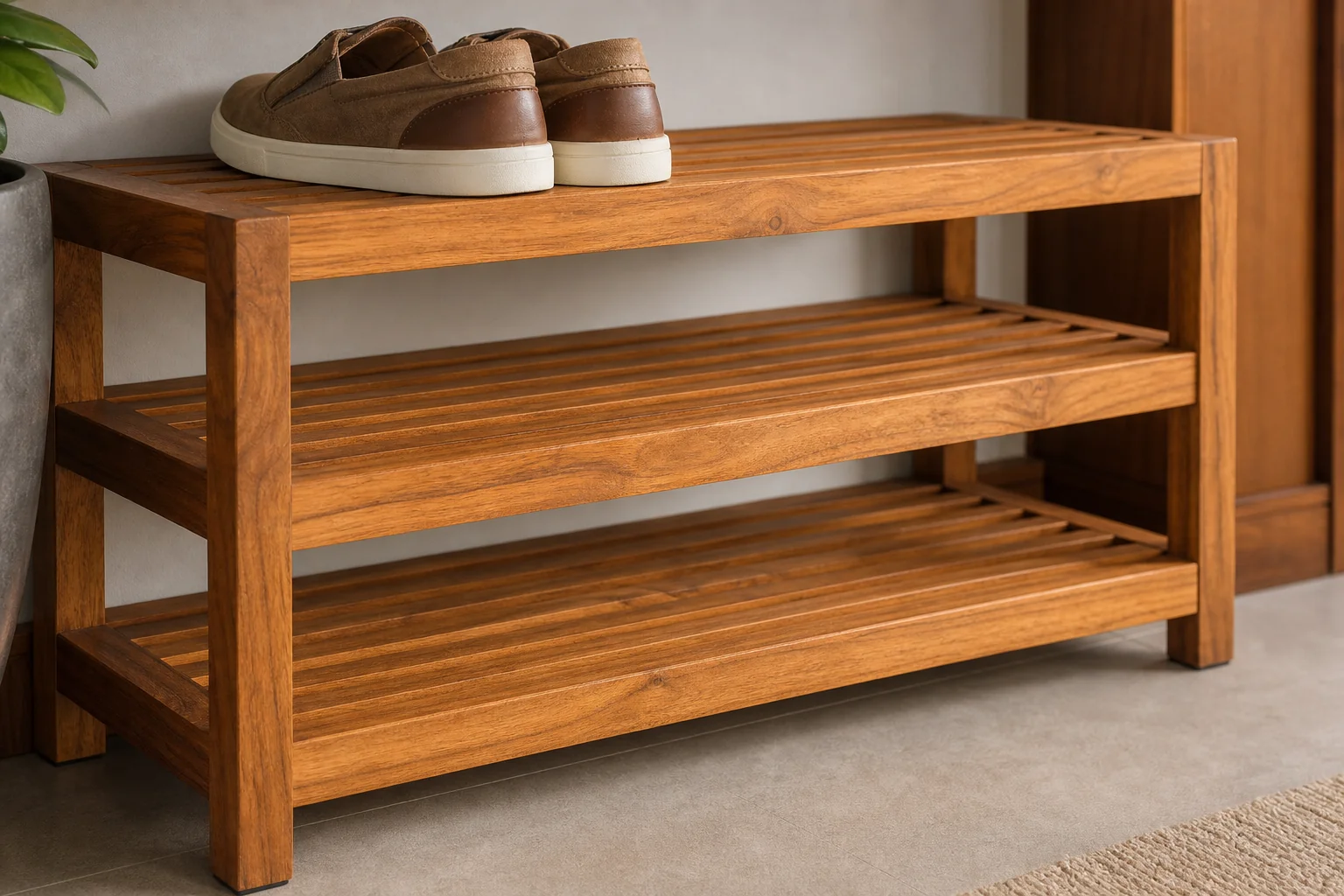
Solid-back cabinets can still work if the doors themselves have vents or mesh panels. Without that, closed storage becomes a slow trap for damp shoes, especially ones brought in during rain.
4. Why Solid Teak Wood Outperforms Engineered Wood for Entryway Racks
Solid teak resists warping at entryways better than engineered wood because its natural oils repel moisture instead of absorbing it, while MDF or particleboard swells and delaminates when it repeatedly meets wet shoes and tracked-in rain.
An entryway is arguably the hardest-working spot in any home. It takes dust, grit, monsoon splashes, and constant weight shifting every time someone drops a bag or a pair of boots on top. Engineered wood, built from compressed fibres and glue, softens and swells when it absorbs that recurring moisture.
Teak’s heartwood contains natural oils that push water away rather than soak it in, which is the same property that makes it a preferred choice for outdoor furniture. For a full side-by-side breakdown of how the two materials perform under Indian household conditions, see our teak wood vs engineered wood furniture guide.
5. Check Finish Durability and Maintenance Needs
A matte, scuff-resistant sealant holds up better at an entryway than a high-gloss finish, which shows scratches and shoe scuffs almost immediately near the door.
Ask sellers what sealant or oil finish they use. A good teak finish should resist water rings from wet umbrellas and shouldn’t need re-oiling more than once every year or two under normal household use.
A shoe rack near the main door takes more daily contact than almost any other furniture piece in the house, so its finish needs to handle friction, not just look good in a product photo.
Once you own one, upkeep is simple. Wipe down weekly with a dry cloth and apply teak oil twice a year to keep the grain from drying out. Our detailed guide on maintaining teak wood furniture at home covers the full routine, including what to avoid using on the finish.
6. Common Mistakes to Avoid When Buying a Shoe Rack Online
Buying entryway furniture online means you can’t touch the wood before it arrives, so certain mistakes repeat constantly across first-time buyers.
- Ignoring listed dimensions: A rack photographed against a plain wall can look bigger or smaller than it actually is. Always cross-check the exact cm measurements against your own tape-measured space.
- Assuming photos show real wood grain: Some low-cost racks use printed laminate that mimics grain patterns. Look for close-up images and check if the listing specifies solid wood versus veneer.
- Skipping joinery details: Screwed particleboard joints loosen fast under repeated weight-shifting. Mortise-and-tenon or dowel joinery holds up far longer.
- Overlooking shipping and assembly notes: Some racks arrive flat-packed and need tools you may not have on hand; check what’s included before ordering.
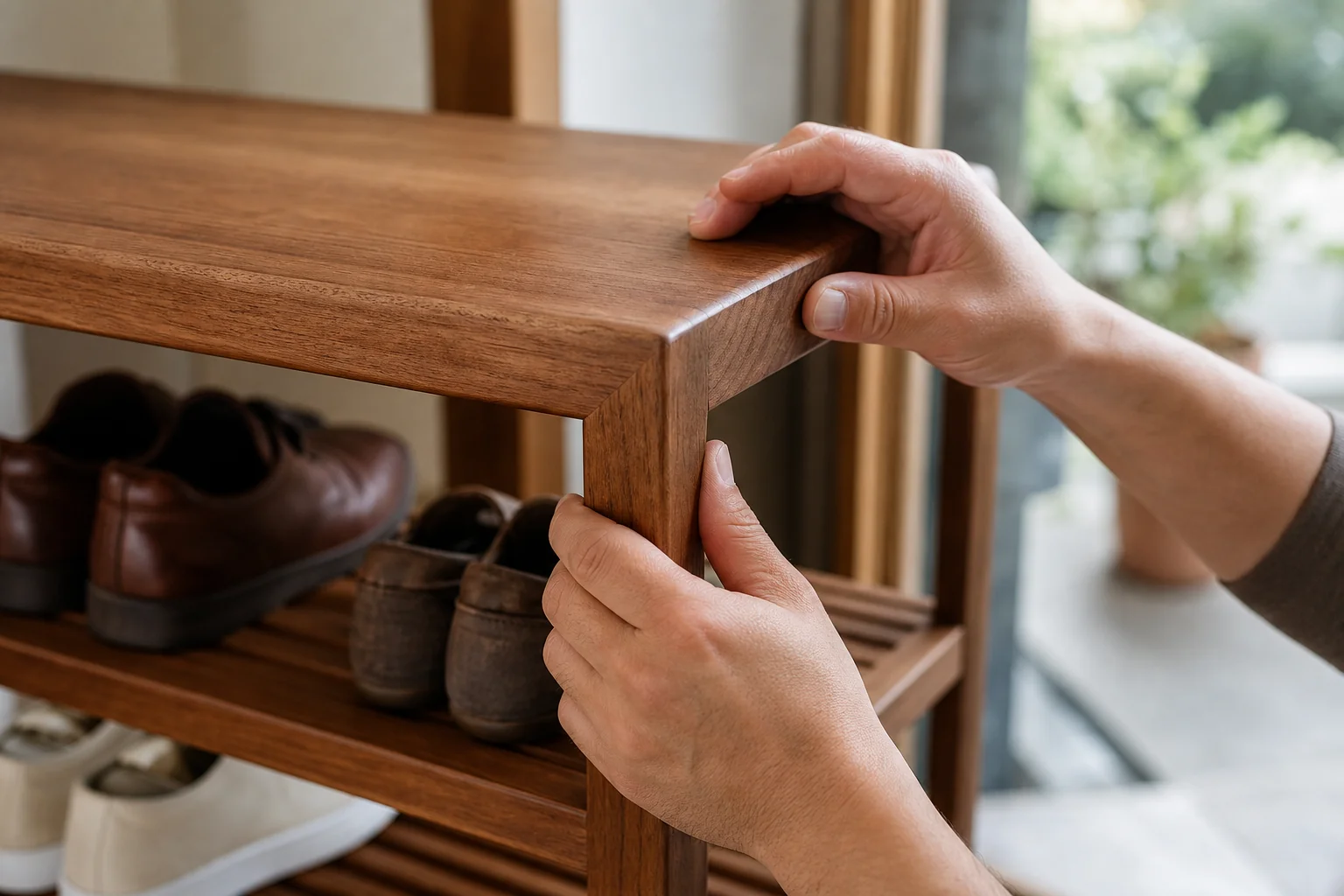
If you want a deeper walkthrough on spotting genuine teak versus mixed or treated substitutes in online listings, read how to check real teak wood before buying furniture before you finalize an order.
Wooden Shoe Rack vs Metal vs Plastic: Which Suits Entryways Best?
Which material actually lasts longest at an entryway?
Solid teak wood lasts longest at entryways, typically 15-25 years with basic care, because it resists moisture and daily impact better than metal or plastic racks, which corrode or crack within a few years of regular door-area use.
| Attribute | Solid Teak Wood | Metal | Plastic |
|---|---|---|---|
| Typical lifespan | 15-25 years | 5-10 years (rust risk) | 2-5 years |
| Moisture resistance | High (natural oils) | Low, prone to rust | High, but warps under weight |
| Look and finish | Warm, upgradeable finish | Industrial, limited styling | Basic, fades over time |
| Weight capacity | High | Medium to high | Low to medium |
| Maintenance | Occasional oiling | Rust-checking, repainting | Minimal, but not repairable |
| Best for | Long-term family homes | Budget, temporary setups | Rentals, short-term use |
Metal racks suit temporary setups where budget matters more than longevity. Plastic works for renters moving frequently, but it rarely survives more than a couple of relocations before hinges crack or shelves sag.
Where a Shoe Rack Fits Into Your Bigger Entryway and Storage Plan
A shoe rack rarely works alone. Pairing it with a low bench or console table gives family members a place to sit while removing shoes, which also stops loose footwear from piling up on the floor beside the rack.
If your storage needs extend past the entryway into bedrooms, the same space-saving thinking applies to bigger pieces. Homeowners juggling limited square footage often ask the same questions about bedroom storage that they ask about their entryway: how much can it hold, and will it hold up. Our guide to choosing a storage bed that fits your room walks through those same selection principles for bedrooms.
TeakLab’s entryway collection is built around this same logic, solid teak, ventilated shelving, and joinery designed to survive daily use rather than just look good in a showroom photo. You can Shop the Collection to compare tiered and cabinet-style racks side by side.
Frequently Asked Questions
How many pairs of shoes should a shoe rack hold?
A shoe rack should hold at least 20% more pairs than your household currently owns, since footwear collections grow with seasons, kids, and new purchases. A family of four typically needs room for 20-30 pairs across daily and seasonal use.
Should I choose a wall-mounted or freestanding shoe rack for a rented home?
Freestanding racks suit rented homes better because they avoid drilling into walls and can move with you when the lease ends. Wall-mounted racks work well only in owned homes where permanent fixtures make sense.
How do I clean and maintain a teak wood shoe rack?
Wipe a teak shoe rack weekly with a dry or slightly damp cloth to remove dust and grit tracked in from outside. Apply teak oil every six to twelve months to keep the finish from drying out and to maintain its water resistance.
Is a slatted rack better than a closed cabinet for humid cities?
Yes, slatted racks outperform closed cabinets in humid cities because open shelves let air circulate around damp shoes instead of trapping moisture inside a sealed compartment, which reduces odour and mould risk significantly.
A well-chosen wooden shoe rack solves more than clutter, it protects your footwear and keeps your entryway functional through every season. Browse TeakLab’s ventilated, solid teak shoe rack designs and Select options that match your entryway’s exact width and household size, or Quick view a few models before deciding. Once you’ve found the right fit, you can Add to basket and have it shipped straight to your Bhopal home.