Blog
How to Choose the Right Wooden Study Desk for Kids

Pick a wooden study desk for kids by checking four things in order: correct desk-and-chair height for your child’s age, a stable solid-wood frame with no sharp corners, storage that matches how much they actually keep on hand, and a child-safe, low-odour finish. Get these right and one desk can serve a Bhopal child from Class 2 through Class 10.
Key Takeaways
- Height matters more than width: a desk 20-22 inches high suits a 5-7 year old, while 24-26 inches suits ages 10-14.
- Solid teak outperforms particle board: teak resists Bhopal’s dry summer-to-monsoon humidity swing without warping at the joints.
- Rounded edges are non-negotiable: any desk with a squared-off corner at child head-height is a fall-and-collision risk.
- Storage should match habits, not aspirations: two drawers and one open shelf cover most school-age needs without clutter.
- Finish safety is a checkable fact: ask for a low-VOC, water-based finish and confirm there’s no strong chemical smell on delivery.
At a Glance: Study Desk Selection Checklist
| Factor | What to Look For | Why It Matters |
|---|---|---|
| Desk height (ages 5-8) | 20-22 inches | Keeps elbows level, prevents slouching |
| Desk height (ages 9-14) | 24-26 inches | Matches growth spurts without a full replacement |
| Wood type | Solid teak over engineered wood/MDF | Resists humidity, holds screws and joints for years |
| Edge profile | Rounded or bullnose corners | Reduces injury risk during play and movement |
| Storage | 1-2 drawers + 1 open shelf | Matches typical school-age book and stationery load |
| Finish | Low-VOC, water-based, odour-free on delivery | Prevents chemical exposure for a child at close range |
| Leg structure | Cross-bracing or wide four-leg base | Stops wobble under repeated leaning and writing pressure |
| Expected usable years | 6-8 years per desk | Justifies spending more on solid wood over cheaper alternatives |
1. Start With Ergonomics, Not Looks
Ergonomics decides how a study desk affects your child’s posture and eyesight, and it should come before colour or design. A desk 20-22 inches high suits a child aged 5-7, while one at 24-26 inches fits ages 10-14, with the chair seat roughly 4-6 inches below the desktop.
A desk that’s too tall forces a child to hunch their shoulders to write. One that’s too low pushes their knees up against the underside, which shortens how long they’ll sit still to finish homework. Neither problem shows up immediately, but paediatric physiotherapists in India have flagged both as contributors to early postural strain in school-age children.
If you’re buying for a child who’s still growing fast, look at desks with a slightly deeper worktop rather than a fixed narrow one. A 24-inch depth gives room for a laptop and a notebook side by side, so the desk stays useful even as school assignments get bigger. Chair height should be adjustable if the budget allows; if not, pick a fixed chair sized for the age bracket you’re buying for, not the child’s current age plus a few “growing room” inches.
2. Pick the Right Size for the Room
Most Bhopal apartments allot a corner of the child’s bedroom, not a full study room, to the desk. Measure that corner before you shop: a compact desk under 36 inches wide fits most single-child bedrooms without blocking a door or window.
Corner desks make sense in shared rooms because they use wall space that’s otherwise wasted. An L-shaped unit can seat two children’s essentials, a desktop and a shelf, without doubling the floor footprint. If two siblings share a room, a single wide desk with a divider often works better than two separate desks crammed into the same wall.
Leave at least 24 inches of clearance behind the chair so your child can push back and stand without hitting a bed or wardrobe. This single measurement gets skipped more often than any other, and it’s the reason desks end up unused once they’re wedged in too tight.
3. Check Storage That Actually Gets Used
Storage on a study desk should match what a child actually keeps at hand each week: textbooks, a pencil case, a water bottle, maybe a small lamp. Two drawers plus one open shelf cover this for most primary and middle-school children without turning the desk into a dumping ground.
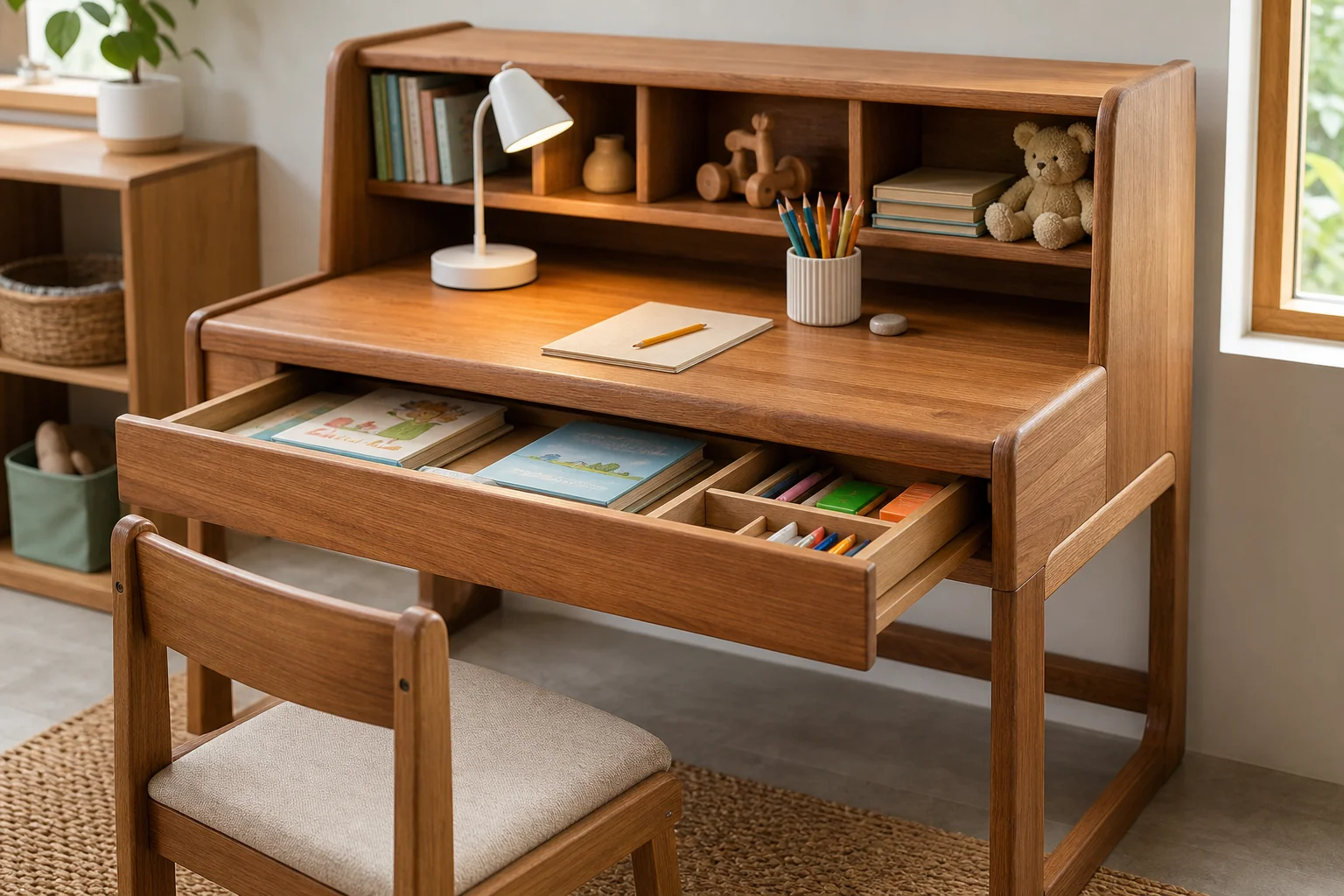
Closed drawers work well for stationery and loose papers that clutter a desktop. Open shelves suit textbooks a child reaches for daily, since a shelf is faster to use than a drawer that has to be pulled and pushed each time. Avoid desks with more than three drawers for younger children; extra storage tends to fill with unrelated items and the desk stops feeling like a workspace.
If your child uses a laptop, check for a cable cutout or a small back panel gap. It’s a minor detail, but it stops a charging cable from dangling across the front edge where it can be pulled or tripped over. Some parents combine a study desk with a nearby wooden bookshelf instead of packing every book into the desk itself, which keeps the desktop clear for actual writing.
4. Why Wood Type and Finish Safety Matter
The wood a desk is built from decides whether it survives daily use for years or starts sagging within one school term. Solid teak resists humidity swings, holds screws firmly at the joints, and doesn’t off-gas the way some engineered boards do under heat.
Engineered wood, plywood, and MDF desks are lighter and usually cheaper upfront. The trade-off shows up over time: particle board swells at the edges once it absorbs moisture, and screws loosen in it faster than in solid wood, especially in cities with a pronounced monsoon like Bhopal and much of Madhya Pradesh. If you want a fuller breakdown of this trade-off across furniture categories, our guide on teak wood vs engineered wood furniture covers the mechanics in more detail.
Finish safety is just as important as the wood itself. Ask the seller specifically whether the desk uses a water-based, low-VOC finish, and check on delivery that there’s no sharp chemical smell. A child spends hours with their face close to this surface, so a finish that’s still off-gassing solvents is a real exposure risk, not a cosmetic concern.
Not sure if a desk is genuine solid teak or a veneer over cheaper board? Our detailed walkthrough on how to check real teak wood before buying furniture shows the grain, weight, and joinery checks you can do before paying.
How do I know if a desk finish is safe for kids?
A safe finish is water-based, low-VOC, and odourless within a day of delivery; strong paint-like smells lingering past that point signal a solvent-heavy coating. Ask the seller for the finish type in writing and confirm it’s rated for children’s furniture before you buy.
5. Red Flags to Avoid When Buying a Kids’ Study Desk
Certain warning signs mean a desk isn’t built for daily use by a child, no matter how good it looks in a product photo. Catching these before delivery saves a return shipment and, more importantly, an injury.
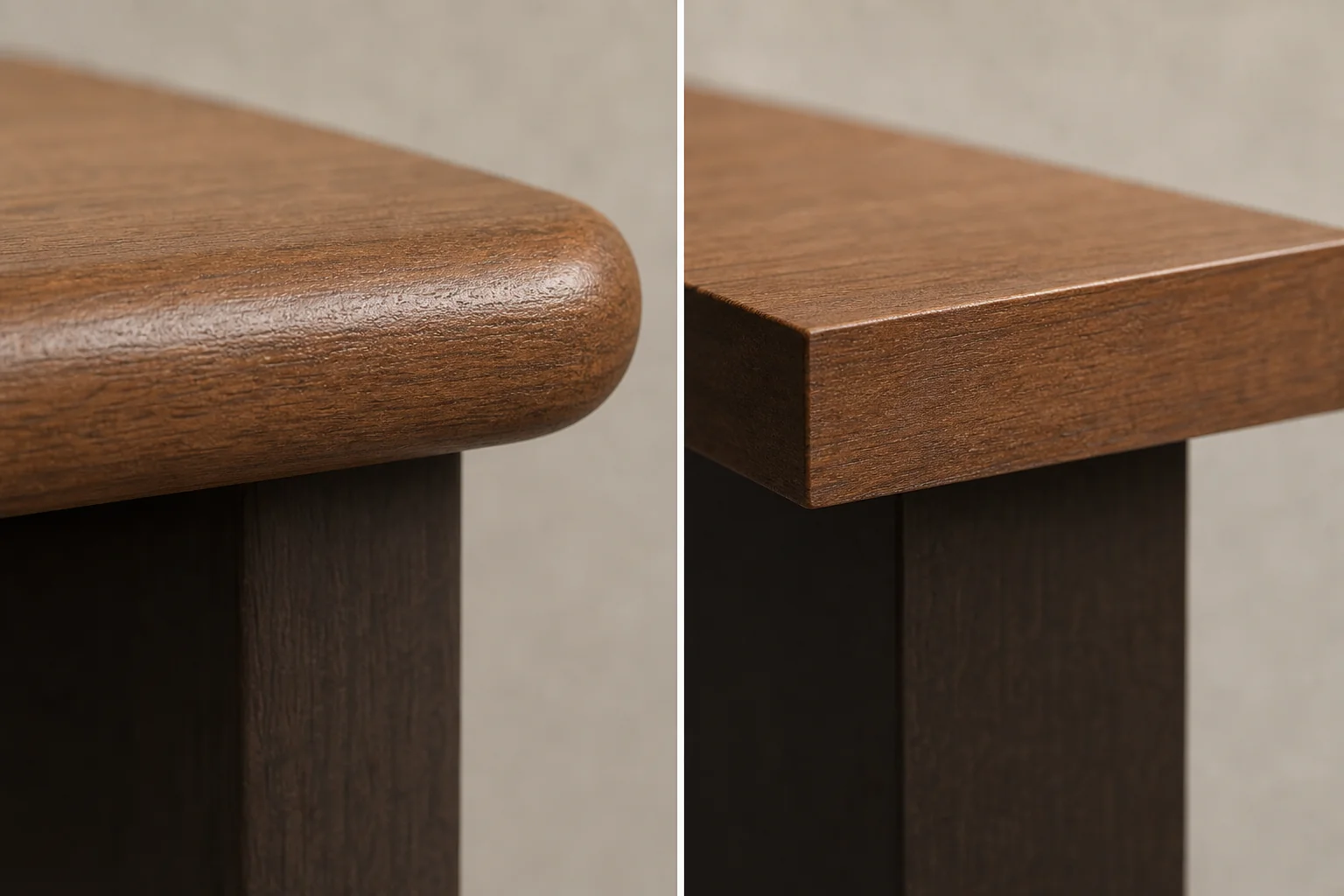
- Sharp, squared edges: any corner at a child’s head or hand height should be rounded or chamfered, not left as a raw right angle.
- Wobbly or thin legs: press down on one corner in the product video or in-store; a stable desk shouldn’t rock on four legs.
- Strong chemical odour: a fresh paint or lacquer smell that doesn’t fade within a day points to a low-quality or unsafe finish.
- Loose or exposed hardware: screws, brackets, or nails that protrude are a snagging hazard for clothing and skin.
- Vague wood descriptions: listings that say “wooden” without naming the species or grade often mean mixed or reclaimed material of unknown quality.
If you’re furnishing an entire room rather than just the desk, it’s worth reading our broader guide on how to choose safe wooden furniture for kids’ rooms, which covers cribs, wardrobes, and bunk beds using the same safety framework.
6. Matching the Desk to Your Child’s Age and Habits
A desk bought for a 6-year-old and a desk bought for a 13-year-old rarely look the same, and buying for the wrong stage means an early replacement. Toddlers and early primary kids need a low, wide surface with minimal storage, since most of their supplies are still managed by a parent.
By middle school, a child needs a dedicated drawer for their own stationery, a stable surface for a laptop, and enough desktop depth for two open books side by side. Teenagers benefit from a slightly larger desk that can double as a homework and hobby space, sometimes shared with a study chair that has better back support.
If budget allows only one desk for several years, choose a mid-height option around 24 inches with an adjustable chair, rather than a very low desk that will need replacing within two years. Solid teak desks hold their joints well enough to be handed down between siblings, which changes the maths on cost per year of use even if the upfront price is higher than a laminate alternative.
Is a Teak Wood Study Desk Worth It for Kids?
Yes, for most families a solid teak study desk is worth the higher upfront cost because it lasts through multiple school years, and often multiple children, without the sagging or swelling that affects engineered wood. The real saving shows up over five to eight years, not on day one.
A desk that needs replacing every two years because a drawer jams or a leg cracks ends up costing more in total than one purchase that holds up through a decade of homework, projects, and the occasional dropped water bottle. Teak’s natural oils also mean it doesn’t need frequent refinishing, so upkeep stays minimal; our guide on how to maintain teak wood furniture at home covers the basic care routine if you want specifics.
One thing worth being honest about: a solid teak desk is heavier and harder to reposition than a lightweight laminate one, so measure the room layout carefully before ordering, since moving it around later isn’t as simple.
Frequently Asked Questions
What is the ideal height for a kids’ study desk?
The ideal height is 20-22 inches for children aged 5-7 and 24-26 inches for ages 10-14, measured so the child’s elbows rest level with the desktop when seated. Adjustable-height desks or chairs extend the usable years without a full replacement.
Should I buy a desk that grows with my child, or size for now?
A mid-range height around 24 inches paired with an adjustable chair covers the widest age range without forcing an early upgrade. Sizing strictly for a toddler’s current height usually means replacing the desk within two years.
Is teak wood better than engineered wood for a kids’ desk?
Solid teak holds up better in humid or monsoon-prone cities because it resists swelling and keeps screws tight at the joints for years. Engineered wood costs less upfront but tends to sag or loosen faster under daily use by a child.
How do I check for wobbly legs before buying online?
Look for four-leg designs with cross-bracing or a wide stance, and check customer photos or videos for any visible gap where a leg meets the frame. On delivery, press down firmly on each corner of the desktop; a stable desk won’t rock or creak.
A well-chosen wooden study desk shapes how a child feels about homework for years, not just weeks. If you’re ready to compare options built in solid teak with rounded edges, checked joinery, and child-safe finishes, you can shop the collection at TeakLab and filter by size and storage to match your child’s room in Bhopal or anywhere else across India. Found a design that fits? Add it to your basket today, or use quick view on any listing to check dimensions and finish details before you decide.