Blog
How to Choose Safe Wooden Furniture for Kids’ Rooms

A toddler in a Bhopal apartment once pulled herself up on a cheap wardrobe drawer, using it like a ladder rung. The whole unit rocked forward before her father caught it. That single close call is why so many parents now spend hours researching furniture before they order anything for a nursery or kids’ room. If you are trying to figure out how to choose safe wooden furniture for kids’ room spaces, you are asking exactly the right question at exactly the right time, before the delivery truck arrives, not after.
Furniture for a child’s room has to survive a very different kind of use than a living room console. Kids climb it, chew it, bounce on it, and hang their full body weight off drawer handles. A dining chair only needs to hold still. A toddler bed needs to hold up against jumping, kicking, and the occasional sibling wrestling match. This guide walks through exactly what to check, piece by piece, whether you’re shopping for a crib, a first big-kid bed, or a simple wooden shelf, and what red flags should make you close the browser tab immediately.
Why Furniture Safety Matters More Than Style in a Child’s Room
It’s easy to fall in love with a pastel-painted bed frame or a trendy cloud-shaped shelf online. But style should never be the first filter. Children under five are especially vulnerable to furniture tip-overs, pinch injuries, and splinter wounds, largely because their center of gravity is higher and their instinct to climb is strong. The U.S. Consumer Product Safety Commission has documented that furniture tip-overs remain one of the most preventable causes of injury to young children at home, which is why anchoring, weight distribution, and joinery quality matter as much as how a piece looks in a product photo.
In cities like Bhopal, Indore, and across Madhya Pradesh, most parents shop for nursery and kids’ furniture online rather than visiting a showroom with a toddler in tow. That convenience comes with a trade-off: you can’t shake a bed frame to test its wobble, or run your hand along an edge to feel if it’s actually rounded. This guide gives you a practical checklist so you can make that judgment from a screen, without guessing.
1. Start With the Wood, Not Just the Finish
The single biggest safety factor in kids’ furniture is what’s underneath the paint or laminate. Particleboard and low-grade MDF chip easily, releasing sharp splinters when a corner gets knocked. They also tend to swell and crumble if a sippy cup spills on them, which happens often in a child’s room. Solid wood, particularly dense hardwoods like teak, resists chipping, holds screws and joints far more securely, and simply lasts through years of rough handling.
Teak in particular has a natural oil content that makes it resistant to moisture damage and less prone to warping compared to many domestic softwoods, which matters if the room isn’t climate-controlled year-round. When you’re comparing listings, look for sellers who show the timber species clearly, not vague terms like “engineered wood” or “wood finish MDF” dressed up in nice photography.
If you’re unsure how to tell real solid wood from a look-alike in online photos, our detailed guide on how to check real teak wood before buying furniture walks through the exact visual and descriptive cues to look for, including grain patterns, weight indicators, and how honest sellers describe their joinery.
2. Check for Rounded Edges and Smooth Corners
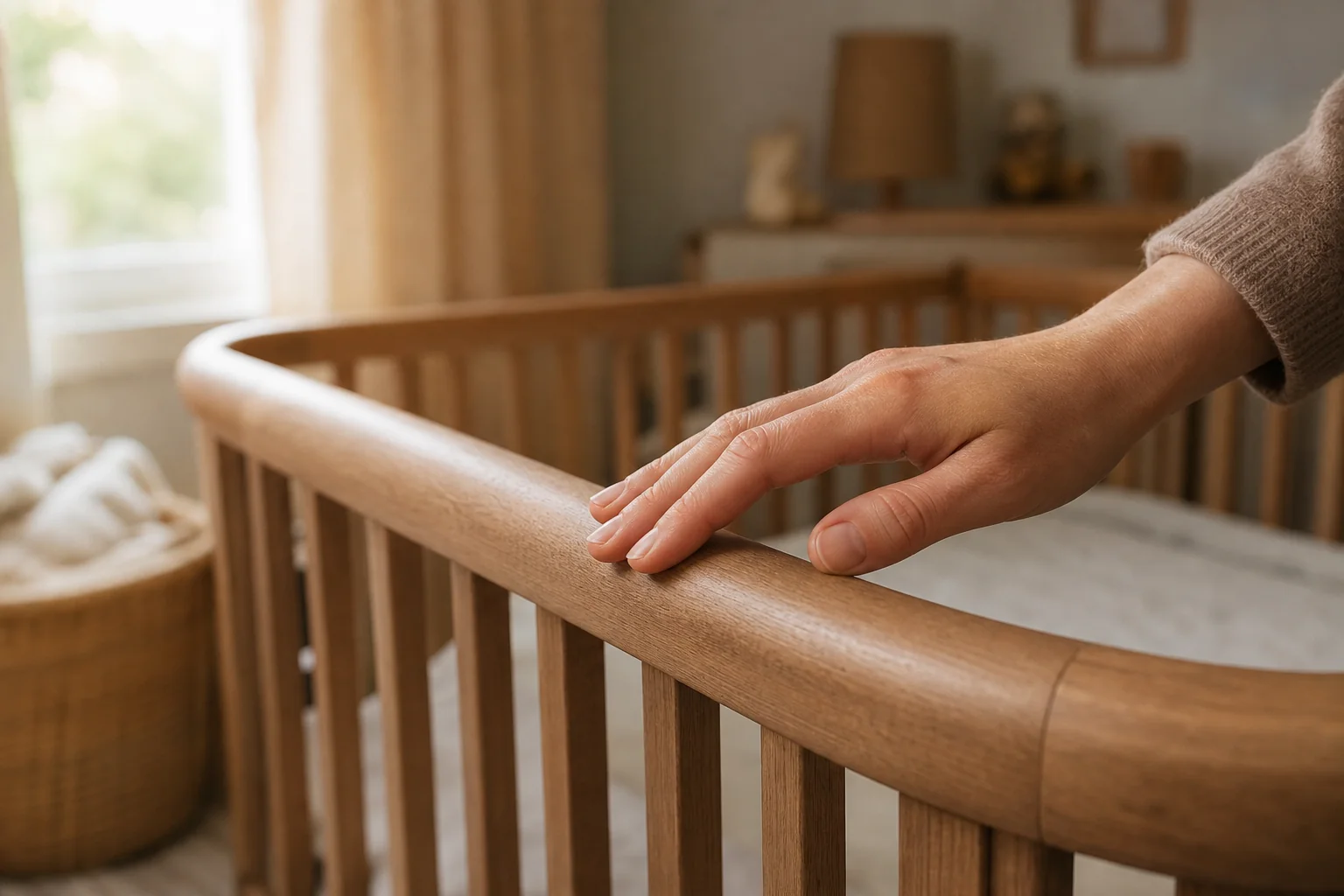
A toddler learning to walk falls constantly, and furniture is usually what breaks the fall, often face-first into a corner. That’s why every serious safety checklist for kids’ furniture starts with edge profile. Sharp 90-degree corners on a nightstand or toy chest are a genuine hazard at head height for a one- or two-year-old.
When you’re browsing product photos, zoom into the corners of the bed frame, table edges, and shelf fronts. Look for:
- Bullnose or beveled edges that curve outward rather than meeting at a sharp point
- Sanded, smooth surfaces with no visible tool marks or rough grain along the edges
- Consistent rounding on every corner, not just the front-facing ones shown in the hero image
If a listing only shows a wide-angle photo of the whole piece, message the seller and ask for a close-up of the corners before you add anything to your basket. A furniture maker confident in their edge-finishing will happily send one.
3. Insist on Non-Toxic, Child-Safe Finishes
Babies chew on crib rails. Toddlers lick tables. Any finish applied to furniture that will spend years in a child’s room needs to be safe in direct, repeated contact with skin and saliva. Cheap synthetic lacquers and some spray-applied varnishes contain higher levels of volatile organic compounds (VOCs), which can off-gas for months after the furniture arrives, especially in a closed nursery.
Look for sellers who specify water-based, low-VOC, or food-grade finishes. A strong chemical smell straight out of the packaging is a clear warning sign, not something that will simply “air out in a day.” Ask the seller directly what finish they use and whether it’s safe for a child who mouths furniture surfaces. A transparent answer with specifics is a good sign; a vague “it’s totally safe, don’t worry” response is not.
4. Test Joinery and Structural Stability
Kids’ furniture takes a beating that adult furniture rarely sees. A dining chair holds one seated adult; a kids’ bed might hold two jumping siblings. Storage units get climbed like ladders, whether parents want them to or not. This is where joinery quality separates furniture that lasts a childhood from furniture that fails within a year.
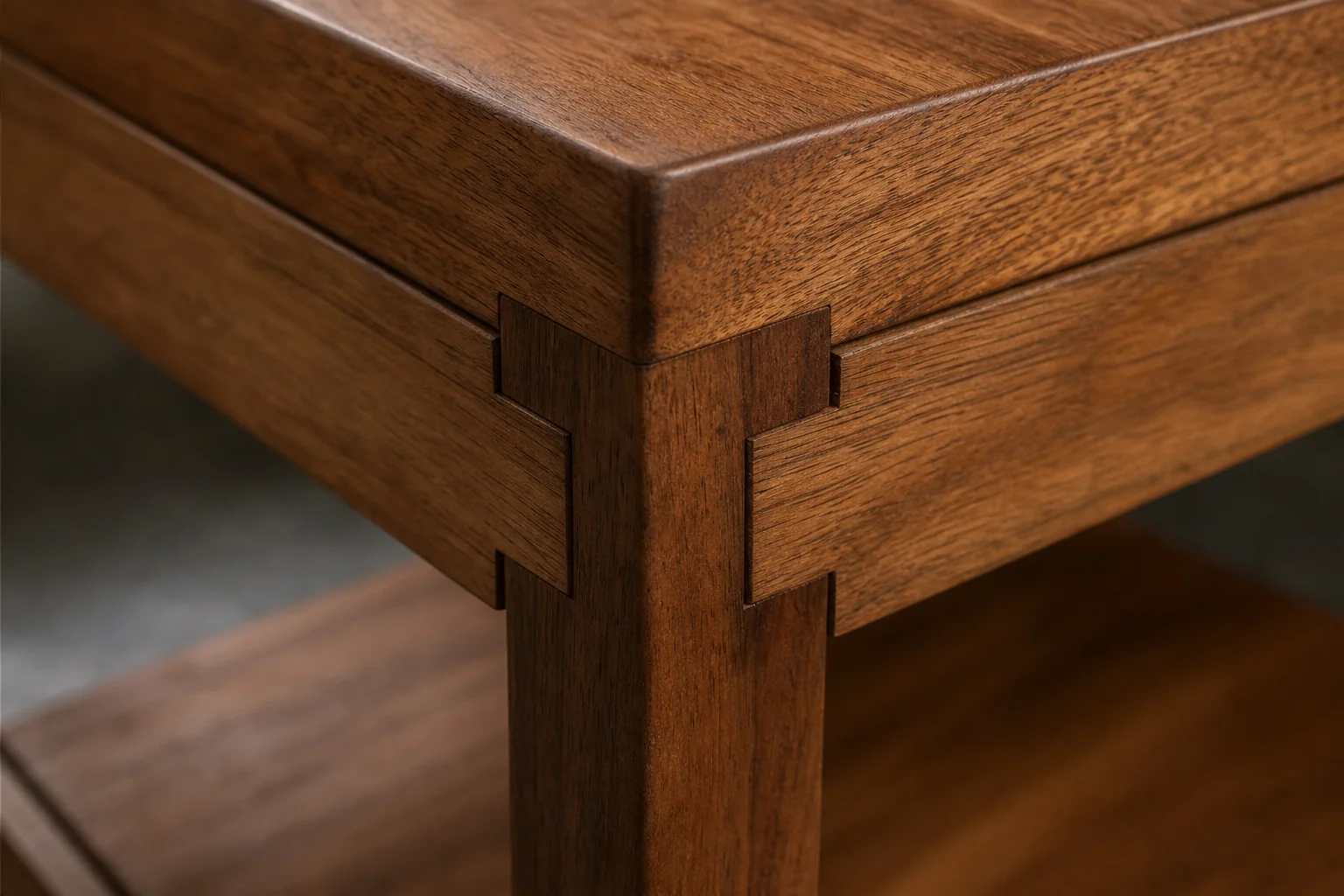
Look for mortise-and-tenon joints, dovetail drawer construction, and screwed (not just glued or stapled) frame connections. Furniture held together primarily with glue, staples, or cam locks tends to loosen quickly under repeated stress. For any tall piece, like a wardrobe, bookshelf, or chest of drawers, check whether the seller provides or recommends an anti-tip wall-anchoring kit. A dresser that isn’t secured to the wall is one of the most common causes of tip-over injuries in young children, according to child-safety researchers and the CPSC’s ongoing furniture stability campaigns.
For bunk beds and loft beds specifically, verify the stated weight capacity per bunk, not just the total frame rating, and confirm the guardrail height meets a safe standard for the child’s age.
5. Specific Checks for Cribs and Baby Furniture
Cribs deserve their own checklist because an infant has zero ability to remove themselves from a dangerous situation. Before buying any crib online, confirm these details directly with the seller if they aren’t already in the listing:
- Slat spacing should be narrow enough that a baby’s head or limbs cannot slip through, generally no more than about 6 centimeters between slats
- Fixed sides only. Drop-side cribs have been linked to serious entrapment and suffocation incidents and are no longer considered safe by most modern safety standards
- Snug mattress fit with no gap wider than two fingers between the mattress edge and the crib frame
- Adjustable mattress height so you can lower the base as your baby starts to sit and stand
- No cutouts or decorative carvings at head height that could trap a small limb
A well-built solid wood crib, finished with a non-toxic sealant and free of any drop-side mechanism, remains one of the safest long-term investments for a nursery. It’s also usually sturdy enough to convert into a toddler bed later, which saves you from buying a second piece within a year or two.
6. Choosing Safe Kids’ Beds and Bunk Beds
Once your child moves out of a crib, the bed frame becomes the centerpiece of the room, and the safety checklist shifts slightly. For a first toddler bed, keep the frame height low, close to the ground, so a nighttime tumble doesn’t turn into a real fall. Rounded corner posts remain important here too, since kids this age are still unsteady on their feet.
If you’re considering a bunk bed for two children sharing a room, guardrails on the top bunk are non-negotiable, and the ladder rungs should be wide, evenly spaced, and rounded rather than sharp-edged metal bars. Weight-bearing joints at the corners where the top bunk meets the frame take enormous stress over years of use, so this is exactly where solid wood joinery outperforms cheaper builds. If you want a full breakdown of what drives cost differences between entry-level and premium bunk frames, our guide on teak wood vs engineered wood furniture explains why the frame material affects both safety margins and long-term durability.
7. Storage Furniture: Wardrobes, Toy Chests, and Bookshelves
Storage pieces cause more tip-over injuries than almost any other furniture category in a child’s room, largely because kids open drawers and use them as footholds to reach higher shelves. When shopping for a wardrobe, toy chest, or bookshelf for a kids’ room, check for these specific features:
- Wall-anchoring hardware included or recommended, especially for anything taller than waist height
- Soft-close hinges on doors and lids to prevent pinched fingers, a very common minor injury with basic hinges
- No locking lids on toy chests, since a child could become trapped inside if the lid seals shut
- Ventilation gaps if a chest does have a lid, so airflow isn’t fully blocked
- Low center of gravity, meaning a wide, heavy base rather than a top-heavy design that tips easily when a drawer is fully extended
A well-built wooden wardrobe with proper anchoring and soft-close hardware isn’t just safer, it also tends to hold its shape and function for years, which matters as a growing child’s storage needs change. If you’re weighing a full storage bed against separate wardrobe and drawer units, this comparison of a multifunctional storage bed covers how combined designs can reduce the number of tall, tip-prone pieces in a smaller room.
Red Flags to Avoid When Buying Kids’ Furniture Online
After checking wood type, edges, finish, and joinery, run through this final list before you click purchase. Any one of these should make you pause and ask more questions:
- Vague material descriptions like “wood-like finish” or “engineered wood frame” without naming the actual core material
- No close-up photos of joints, edges, or the underside of the piece, only styled hero shots
- Unusually low prices for something marketed as solid hardwood, since genuine solid wood furniture has a real material and labor cost floor
- No mention of finish type or a refusal to answer when you ask if it’s non-toxic and child-safe
- No return or replacement policy, which suggests the seller isn’t confident the product will hold up on arrival
- Missing weight capacity or age recommendations for beds, especially bunk beds and loft beds
A good rule for online shopping: if a seller can’t or won’t answer a specific safety question about wood type, finish, or joinery within a day, that hesitation is itself the answer.
Local Buying Considerations for Bhopal and Other Indian Cities
Central India’s climate swings between a dry, hot summer and a humid monsoon, and that seasonal shift affects how furniture ages. Cheaper particleboard pieces are especially prone to swelling and warping once humidity rises, which can loosen joints exactly in the furniture that needs to stay sturdy for a child. Solid teak handles these swings far better because of its natural oil content and tighter grain structure, making it a practical choice for families across Bhopal, Indore, and other Madhya Pradesh cities where furniture often sits through several monsoon cycles without a controlled indoor climate.
Because most parents in these cities are ordering online rather than visiting a store, delivery quality matters too. Check whether the seller ships with proper corner protection and offers support if a piece arrives with any defect. TeakLab delivers solid teak and rattan furniture, including baby and kids’ collections, to Bhopal, Indore, Bengaluru, Mumbai, Pune, and other major cities, with clear product photography meant to replace the in-showroom inspection you’d normally do by hand.
If you’re furnishing more than just the kids’ room and want to compare wood options for other spaces in the house, our articles on solid teak wood furniture buying in Bengaluru and teak wood dining table pricing cover many of the same wood-quality checks that apply just as much to a nursery bookshelf as they do to a family dining table.
Frequently Asked Questions
Is teak wood safe for baby cribs?
Yes. Solid teak is dense, resists splintering, and holds joints securely, which makes it a strong choice for cribs and toddler beds. Confirm that any teak crib you buy uses a water-based, non-toxic finish, since even the best wood needs a safe surface coating for a baby who will chew on the rails.
What finish is safest for kids’ furniture?
Water-based, low-VOC finishes are the safest option for furniture that children touch, mouth, or sleep against daily. Avoid pieces with a strong chemical odor straight out of the box, and ask the seller directly whether the finish is food-grade safe before buying.
How do I know if furniture is real solid wood before buying online?
Look for listings that name the exact timber species, show close-up photos of the grain and joinery, and mention construction methods like mortise-and-tenon joints. Genuine solid wood also tends to weigh noticeably more than a particleboard equivalent, which experienced sellers usually mention in the shipping details.
At what age is a toddler bed safe to use instead of a crib?
Most pediatric guidance suggests transitioning once a child can climb out of the crib on their own, typically between 2 and 3 years old, though this varies by child. Choose a toddler bed with a low frame height and rounded guardrails for the transition period.
How often should I check kids’ furniture for wear?
Inspect joints, screws, and anchoring hardware every few months, especially after a move or a change in room humidity. Tighten any loose screws immediately and re-check wall anchors on wardrobes and bookshelves at least twice a year.
Choosing Furniture That Grows Up With Your Child
Safe furniture for a kids’ room isn’t about finding the cheapest option or the trendiest design online. It comes down to a handful of concrete checks: solid wood construction, rounded edges, non-toxic finishes, secure joinery, and proper anchoring for anything tall enough to tip. Run through this checklist before every purchase, and don’t hesitate to ask a seller pointed questions about wood species and finish before you order.
TeakLab’s baby and kids’ furniture collection is built from solid teak with rounded profiles and safe, low-VOC finishes designed specifically for nurseries and children’s rooms. You can shop the collection to browse cribs, toddler beds, and storage pieces built to handle years of real childhood use, or use quick view on any listing to check joinery and finish details before deciding. When you’ve found the right piece for your child’s room, add it to your basket and take one solid step toward a safer, sturdier space for your little one to grow up in.